
Puebla Yorkina
HG: Can you introduce yourself to our readers — who is Marissa?
PY: I am Marissa, also Marz or Maritza, a 7 train baddie, Pueblayorkina, esquite loving girlie, first gen, chingona, artist and educator. I would say in me forever lives my Pierce the Veil loving emo self, and she still peaks out all the time. I am also an east river ferry enthusiast- fly asf. Pansexy and panscary. I am also a lover and sometimes, prophetic. I have a lot of dreams that come true. Lastly, I am an anarchist. Oop. Don’t be alarmed, just google! You might be an archaist too.
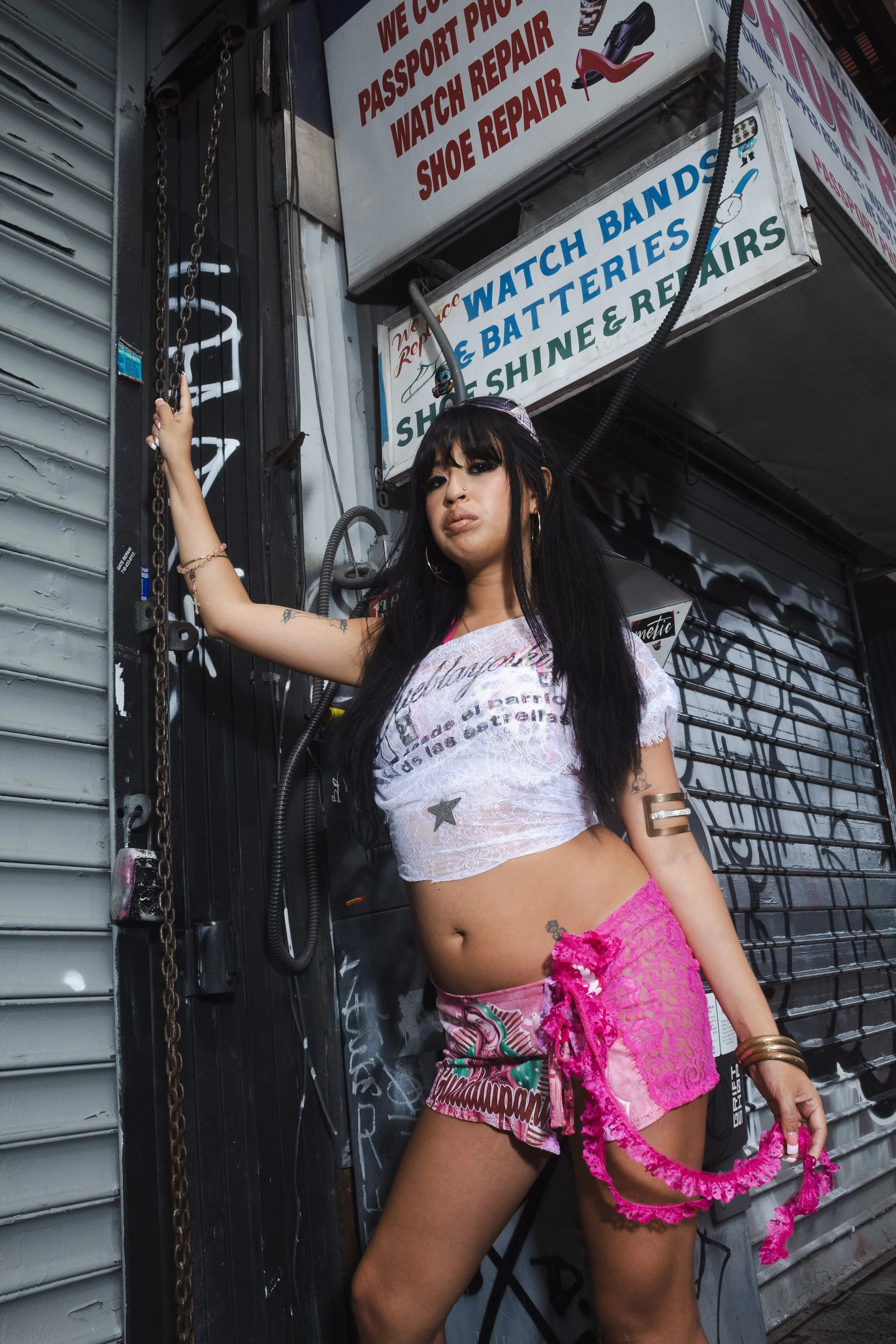
HG: You grew up in Corona, Queens with family from Puebla, Mexico. How did your cultural roots shape your creative identity and inspire your art? What specific elements of your upbringing appear in your work?
PY: Both of my parents are from Puebla. My mom is from Rancho de Atzla a small ranch in Tlapanala, Puebla and my dad is from Tepexco, Mexico. Both of my parents are undocumented and growing up that was very clear to me. I grew up in Corona, where I saw many people deal with challenges due to their migration status. Many of the people around me live in overcrowded homes, work for very little pay, and often have family members that deal with substance abuse issues. I grew up in a household experiencing all three. I am not saying Corona is the reason why this happened, what I am saying is that when communities don’t have access to resources that they need, our communities start to look different.
My introduction to community spaces such as Immigrant Movement International that once stood on 111st really granted me a space to develop my sociopolitical and class conciseness. At the community center, I grew up around Guatemalans, Dominicans, Ecuadorians, Columbians, and Mexicans that valued cultural resistance and building political power. In my home, I was around my uncles, grandfather, my parents, who often brought around their friends drank a couple beers to watch the soccer game and do their quiniela. These experiences were different to each other but helped me understand different capacities of community and shaped who I am. I love el desmadre, but equally I also really love to create socially engaged art with my community.
I will say I don’t promote raising your child around gambling, drinking and substance abuse, but it taught me humility. I don’t look down at my family members who I saw participating in it. Ive always understood that’s partially cultural but also I knew my uncles, my grandfather and my father were trying to aid a wound much deeper. Missing their land and the people they left behind, for a slightly better life.
Growing up in Corona was unique, and it brought me closer to who I am. I grew up listening to cumbias on the streets, seeing my mexican flag fly high through the air and la imagen de la Virgen de Guadalupe on so many restaurants, bakeries, food trucks, and delivery bikes. Afternoons spent in Corona Plaza with my mom whether that was mornings when she set up her speaker to do dance classes, Saturdays facilitating screen printing workshops, hanging out with my friends, or stopping after work for a meal is all special to me. That’s the one spot I can find el elotero, nieve de graffa, get my cemita, tamales, champurado, tepache, fresas con cream, pan dulce y conches, go to La Michoana and get my botanas. I am grateful for Corona because it gave me the opportunity to grow around my culture and our traditions. I have also witnessed my own community resist against the very changes that try to erase our culture and our presence from here. The values and vitality I have learned from growing up in Corona is something I am to bring into my work always.
HG: What made you want to release the
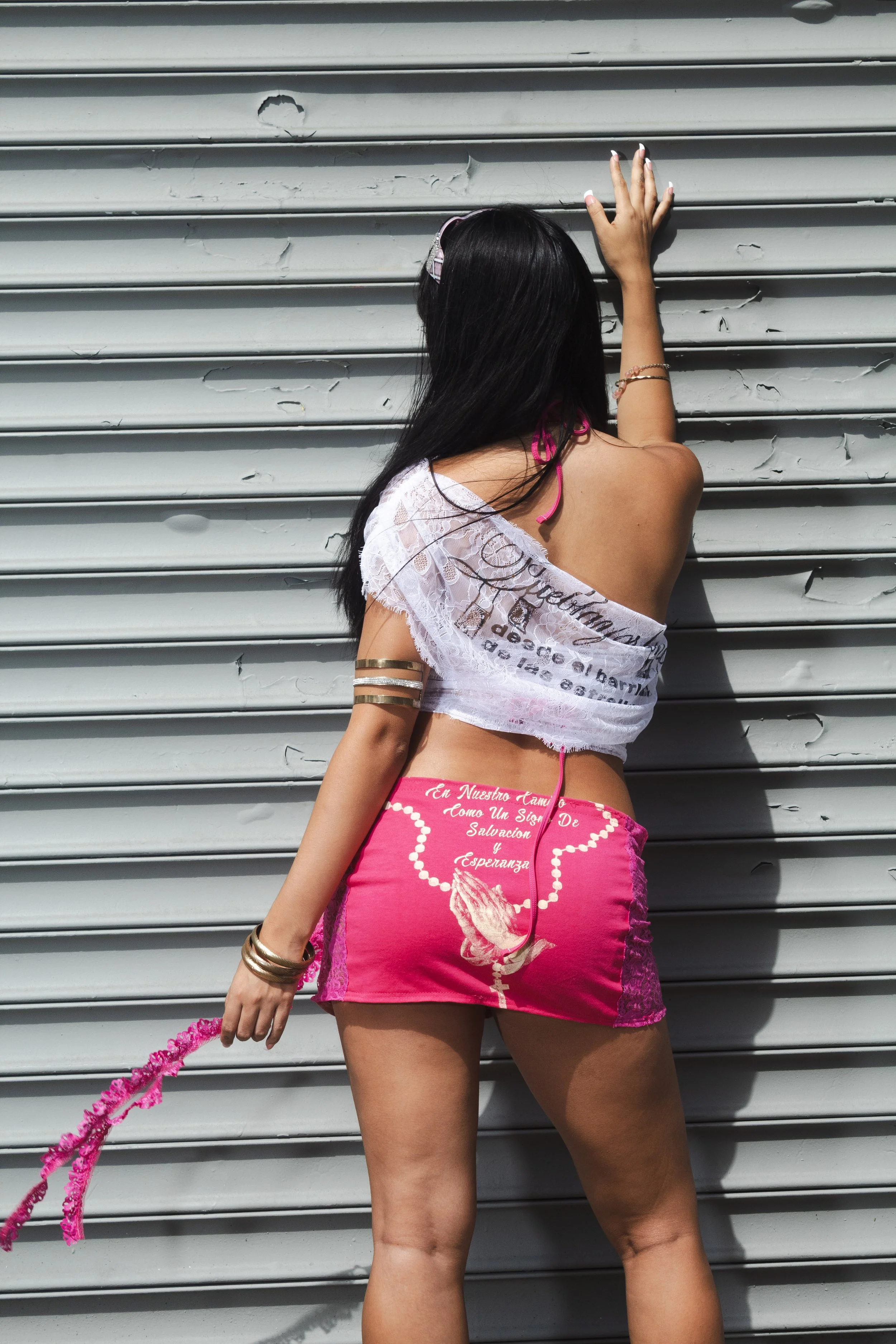
“Morenita Mía” and “Pueblayorkina” skirts first?
PY: My intent wasn’t to sell things, it was really just to make something fun. It wanted to extend my artistic practice into something that interests me which is fashion. I never thought of myself as a business owner. I always saw myself as an artist and I chose clothes as a medium this time around. I struggled a lot with releasing because I did not know what that meant for me or how to do it. It’s not till I asked for some advice and someone told me stick with what works and then go from there.
I decided to release both skirts by popular demand. Folks were asking me when I was going to drop and although it took me a while since my shoot, I did it once I felt ready. I will say I still consider them more so editions of my art rather than clothes.
HG: You hand-make each piece, down to the pattern and printing — how did you learn to do this and what drives your commitment to slow fashion?
PY: All clothes are handmade, however with fast fashion we often detach the person behind the clothes making it and assume it’s like fabricated by a machine/ a manufacturer. We simply forget about all the people and their time that it takes into making a garment. Its a larger symptom of capitalism, we forget the beings behind what we consume. Fast fashion is made for the purpose of mass consumption, and when it comes to fashion it means consuming the latest fashion trends.
My commitment in slow fashion is honoring your person. I would say is understanding what you’re buying and making a connection to the piece of clothing you are wearing. I would also say it is paying the people that are making it. We are not machines we are people and just because you’re used to paying $3 off Shein doesn’t mean it’s right and that what clothes should cost.
My commitment in slow fashion is honoring your person
☆
My commitment in slow fashion is honoring your person ☆
I learned about clothes from my family specifically my father and my aunt. My father spent a majority of his time in the U.S working for a clothing factory where he cut patterns. When he would take me shopping he would touch the fabrics and tell me which one they were and which ones were good quality, My aunt is a designer she makes custom Huipiles for ceremony and to wear. I still come by to her studio whenever I have questions about a pattern and she puts me on to ways to make my things better. When it comes to the pattern, I find myself doing math and taking into count the fabric I am using and cuts I generally like. I can’t lie to you my skirts are mini, and that’s on purpose there is a certain look that I want to achieve in the skirt and it takes trial and error sometimes to complete find pattern that works. My aim with my clothes is to make it adjustable so that you can wear it even when your body changes.
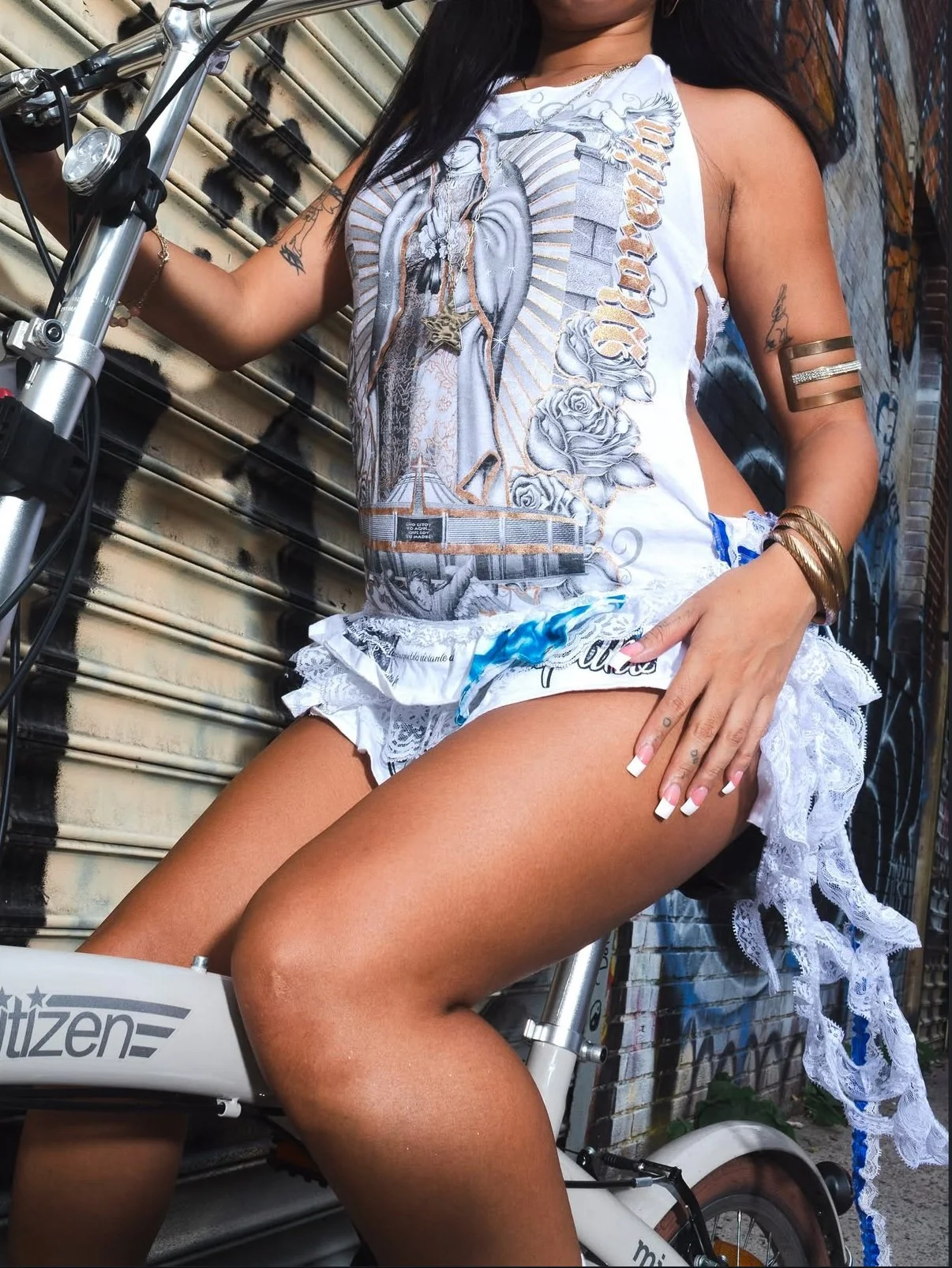
When it comes to the printing, I make the screens myself. I have been screen printing since I have been 11, as a part of Mobile Print Power. Patrick thought me everything I know. Now I work out a studio to develop my screens and I take the screens back to the community center Centro Corona to print there. I make the Pueblaorkina designs myself, I just use photoshop and then make my screen.
HG: Can you walk us through your process- from sourcing to screen printing?
PY: For skirts like Pueblayorkina, I go to the fabric shop, pick up some fabric, then start to making the pattern. Sometimes I have something drawn out, other times I envision and make the piece day to day. When it comes to some of my skirts, I started sourcing ribbons, lace and t-shirts I would rework into skirts in Mexico. These are all ideas I was developing but I had not yet had the opportunity to start till I had a sewing machine. I still have shirts I have yet to rework. When it comes to screen printing, I usually spend a couple days developing a graphic then I get my studio time and take about two days total to make my screens. Screen printing can happen in a couple hours depending on the quantity I am working with. The process is pretty long for myself as I do most things by myself.
HG: If you had a full team and unlimited budget, what would the next drop look like and where do you hope your brand goes?
PY :With a full team, I would love to learn how to weave and develop unique textiles, I would also love to get into metal work and develop some really cool accessories and Jewelry. I would love to make belt buckles. I would also love to connect myself with artisans in Puebla as well as across Mexico to learn more about their practices and techniques. I think for me I hope to expand into the U.S and Mexico when it comes to my brand. I do wish for it to be globally as I would like it to each Mexicans world wide.
HG: Activism is a component of your brand and who you are. You’re a founder, programmer, and member of different organizations. Can you touch on each and why it’s important to unite, especially during this political landscape?
PY: Growing up in Corona, I cherished vibrant Saturdays at Corona Plaza, where my collective and I facilitated community conversations, shared resources, and engaged in a reciprocal exchange of knowledge through art. My commitment to socially engaged art stems from my formative experiences with Mobile Print Power, a social justice printmaking collective. I am a founding member of Mobile Print Power, which has really developed my skills in program development, collaborative creative practices, and my commitment to fostering community centered art spaces. We have collaborated with many arts organizations from MoMA to Unlocal and grassroots organizations like Mujeres en Movimiento, group of immigrant mothers who organize for safer streets in Corona. I am currently a Case planner in child welfare program, I work with many undocumented families who I advocate and provide support for.
HG: What ignites your passion for organizing and empowering minorities? Does this show up in the clothes you make?
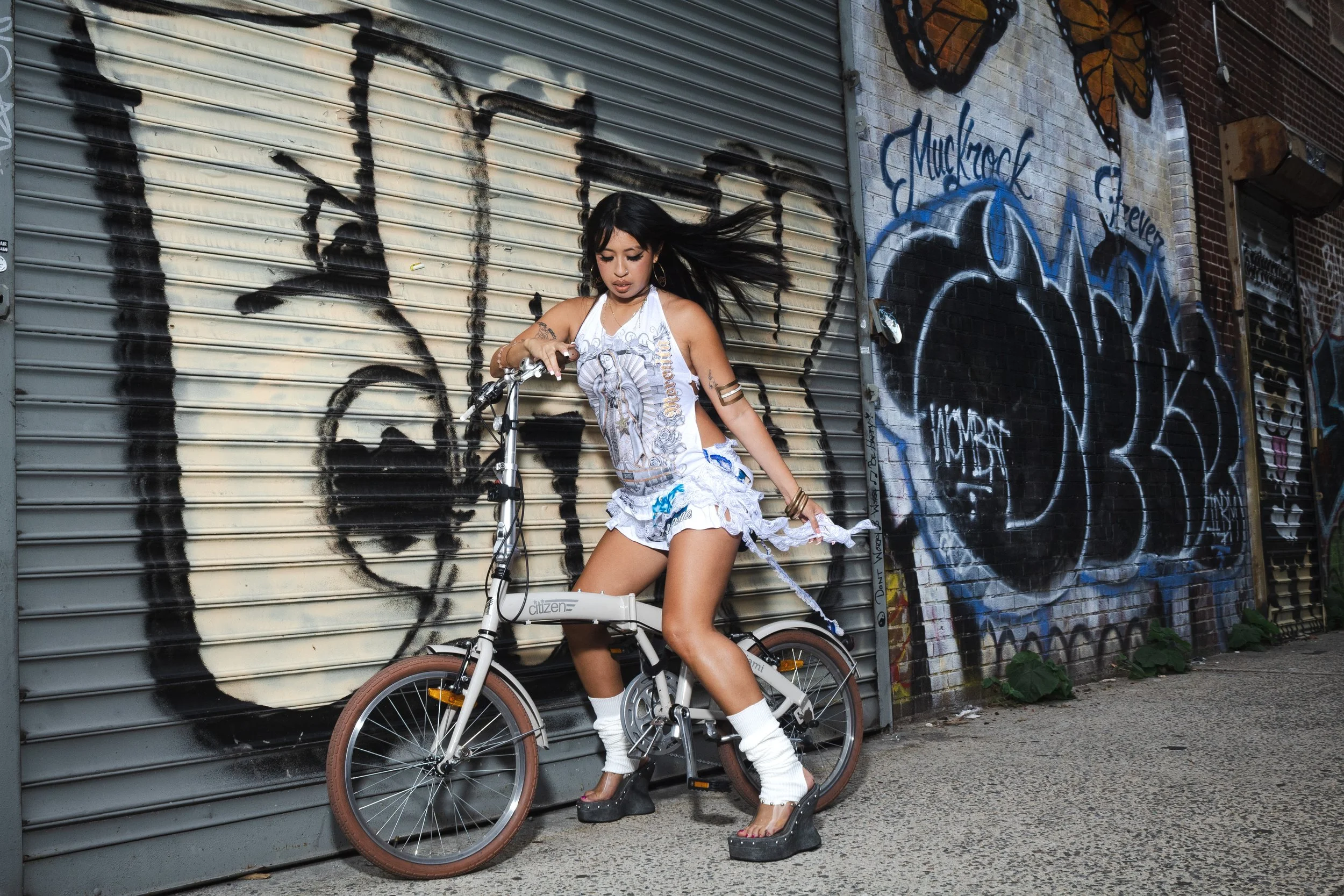
PY:Through my work with mobile print power, Mujeres en Movimiento, Immigrant Movement International, I’ve facilitated conversations for migrant populations to share their stories, reclaim their dignity, and resist erasure. Seeing the changes happening within my own community, these changes shifting the physical landscapes we live in and impact the people around me. From loosing their jobs, to being scared to take their kids to school or even live their home has definitely reinforced my passion to empower minorities.
The power of art and story telling drives me to continue my work. It pushed me to push boundaries and reimagine my world. In my social practice, I believe art is not only as a tool of expression, but a tool for social engagement, community healing and collective action.
There are many things that can be communicated through images, sometimes things that words cannot explain. Images are a universal language, and it shows up in clothes as I believe people can identify where they come from. I will say too in my work I think about the feminine women and what we are thought in our Latin Catholic households and what we learn about how to think about our bodies.
“Images are a universal language, and it shows up in clothes as I believe people can identify where they come from.”
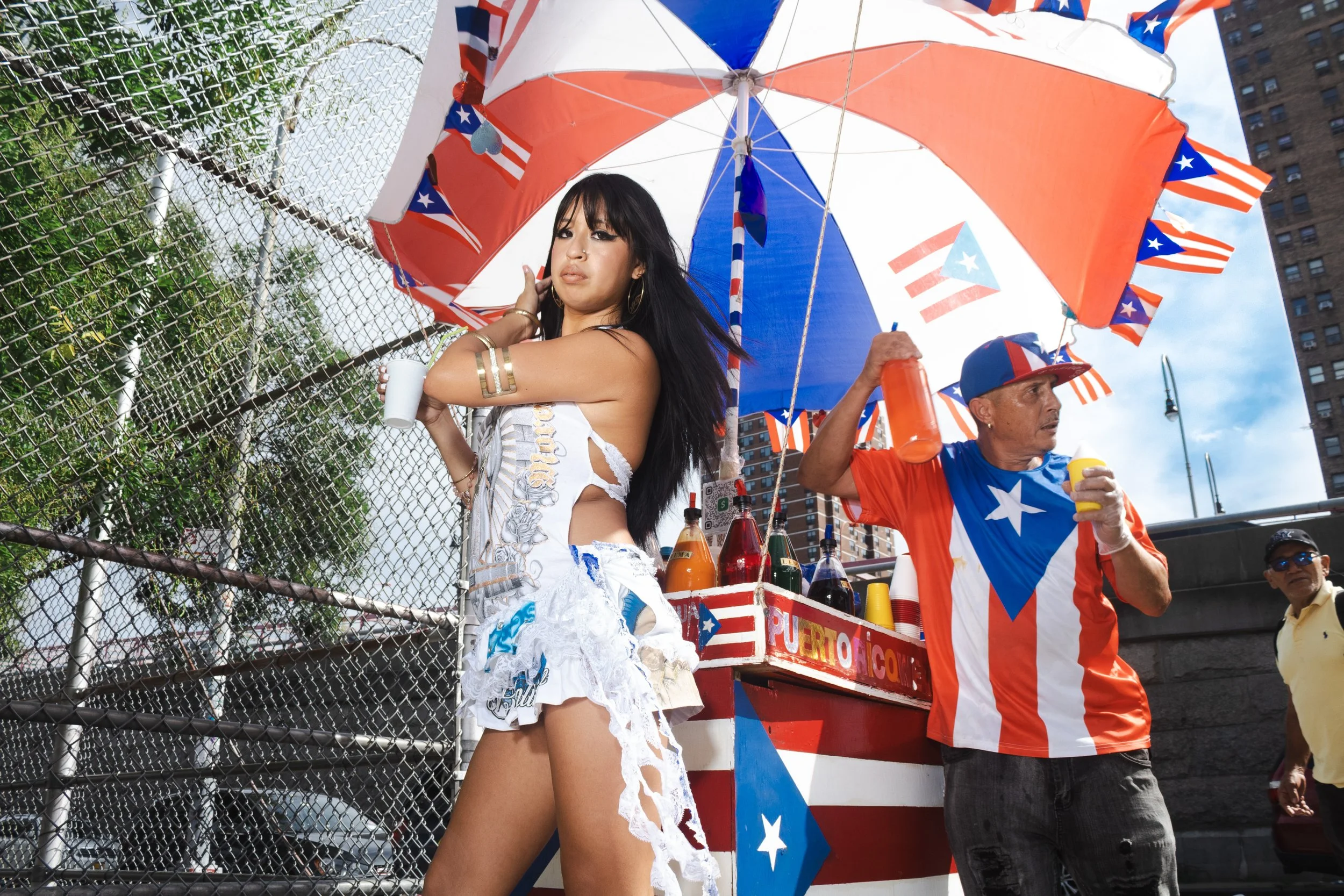
I grew up bigger and I remember feeling like I couldn’t enjoy wearing a mini skirt or. dress because I was “fat” or I would get overly sexualized as a young girl. But I also understand the impact faith has on our community when it comes to migration and their sense of belonging. It was thought to me that La Virgencita de Guadalupe has always protected us. She protected the journey of my parents to the North and continues to protect their well being. Today my mom and her collective Mujeres en Movimiento, gather and pray for their and their immigrant communities wellbeing and strength. Those two narratives are ideas we have had to grapple with. I exploring themes of identity, mestizaje, and the shared feeling of being far from our homelands. These personal and communal stories illuminate the complex relationship between faith and cultural identity, and they inspire my collection.
HG: What difference in the world do you hope to make and how are you going to achieve it?
PY: I really hope to build cross cultural and border solidarity. I want to be able to connect people from all over the world through art and create a better world. I really care about preserving our culture and what cultural resistance looks like for different people. I want folks to feel empowered to embrace their culture and to honor it with dignity no matter the current rhetoric in our political climate. I hope that through building cross border solidarity we are able to shift the current narrative around immigration and race within the U.S and globally. I plan to continue educating folks in my community about political education, their rights and encouraging them to have difficult conversations around isms and unlearn those things. These are conversation I have facilitated and I hope to continue resource sharing and building power.
Production: Ace
Photographer: Britany Paez
Model: Arleth Pando
Stylist: Marz
Makeup: Elaine Wang
Assist: Alex Wedderburn