
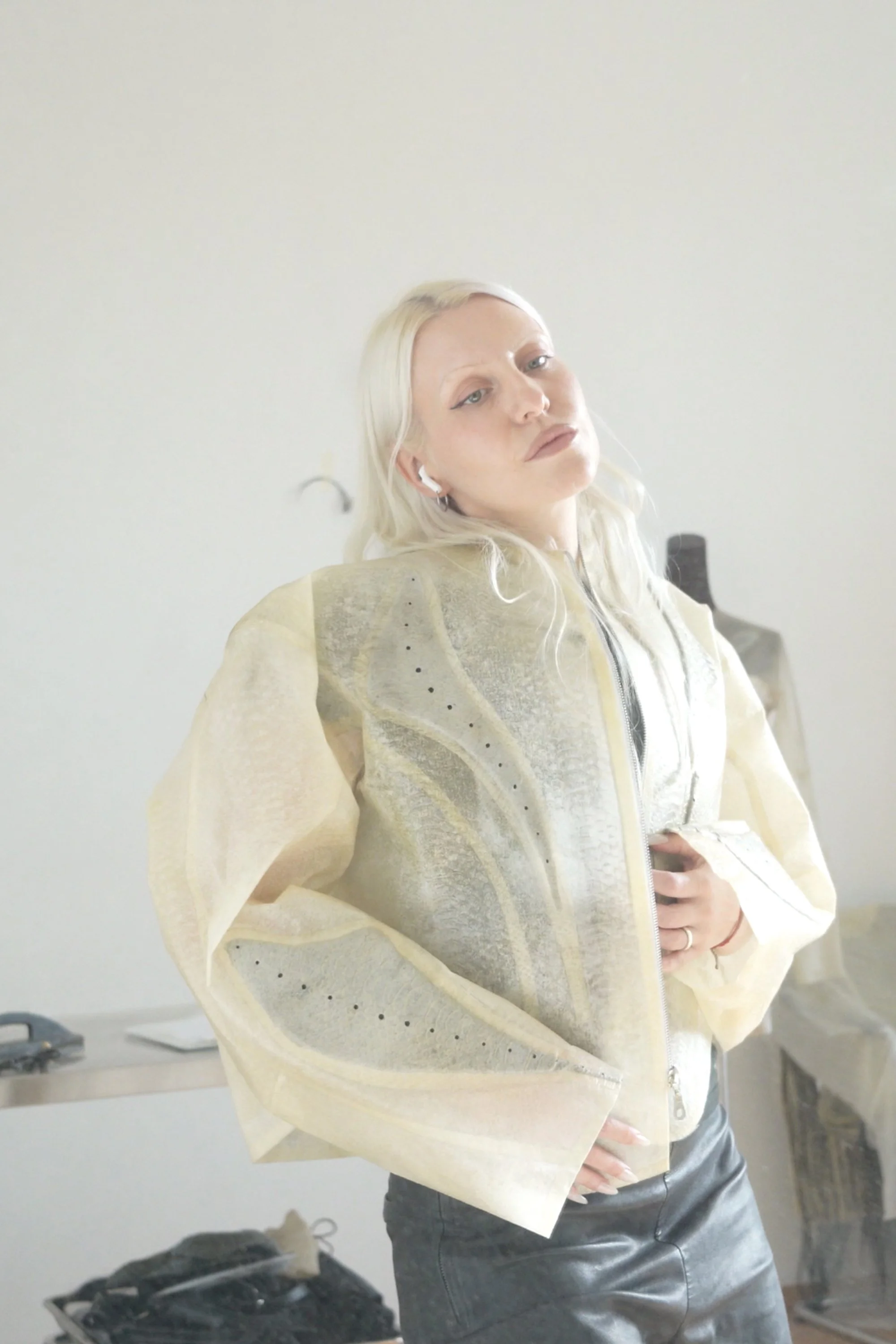
Working out of Berlin, Janine Grosche blends the disciplines of art, unconventional clothing, and soft sculpture into a concoction of its own with the on going inquiry of how materials behave. She leads her industry by having worked in fashion for fifteen years and as a lecturer in Fashion and Textile Design for eight. While ever-evolving, Grosche has harnessed her experience in order to create her unique “second skin”.
Was there an initial interest in going with latex skins or how did you stumble upon the idea?
Honestly, purely accidental. I never sat down one day thinking, “I need to create reptile skins from liquid latex.”
When I started experimenting with liquid latex in 2023, I had no particular outcome in mind. But there was an initial impulse. I had seen the work of Heidi Bucher in person at an exhibition in Beijing, which gave me the creative push to explore this material myself.
Before that, I had experimented extensively with liquid beeswax, sculpting through layering processes, and I was curious about incorporating latex into these experiments. Looking back, I can see a connection between my earlier wax sculptures and the latex skins. They are different manifestations of a similar visual language, even though the materials behave very differently.
That's how I stumbled upon the latex skins. I got excited because I immediately saw so many possibilities in the material. What started as an accidental discovery gradually developed into years of independent material research, where I began developing my own processes and techniques for working with natural latex.
Within the process you said you harvested the latex from the sap of a tree, did the idea come from trying to see what could achieve a specific texture or did it originate from being eco friendly?
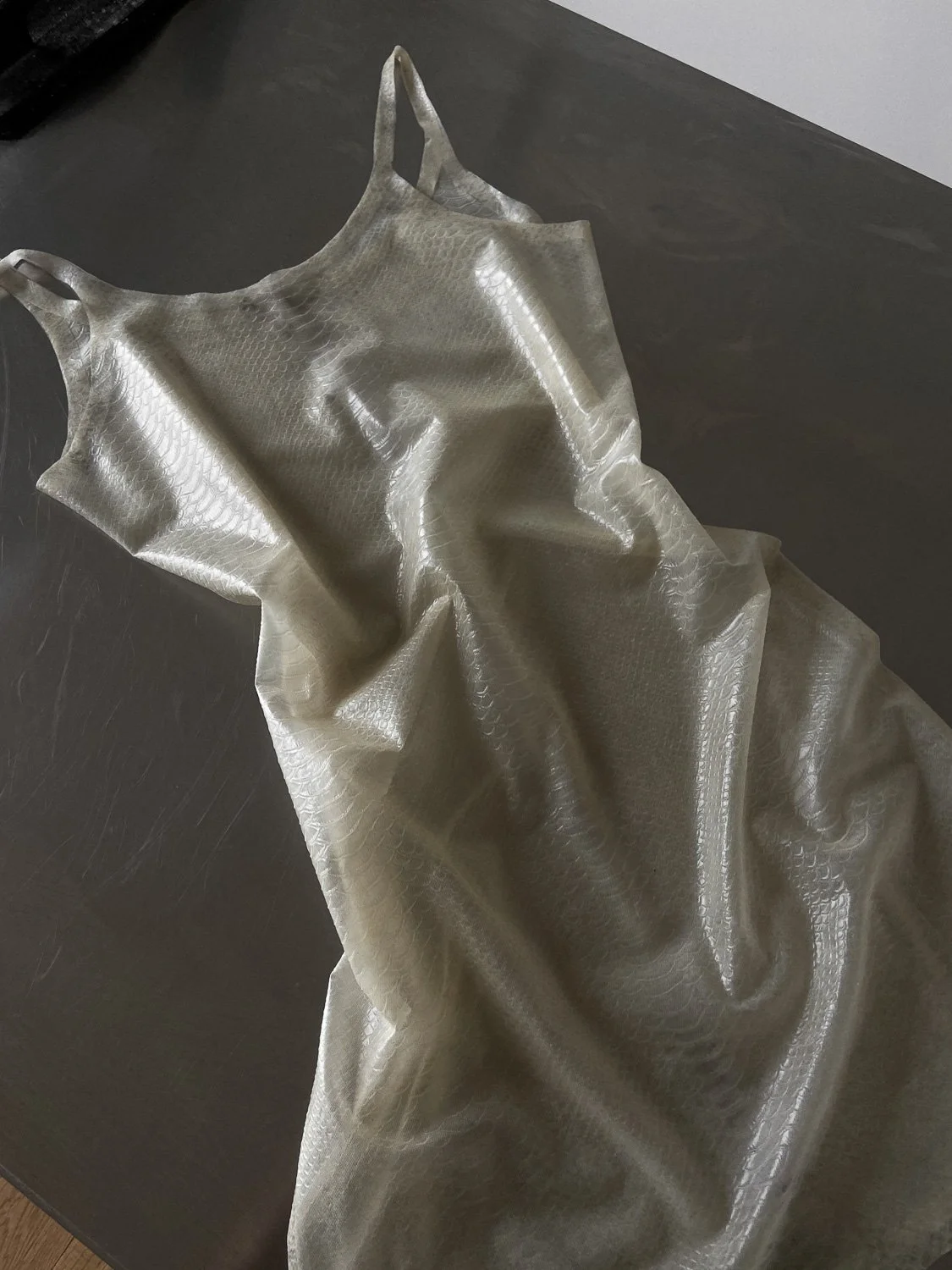
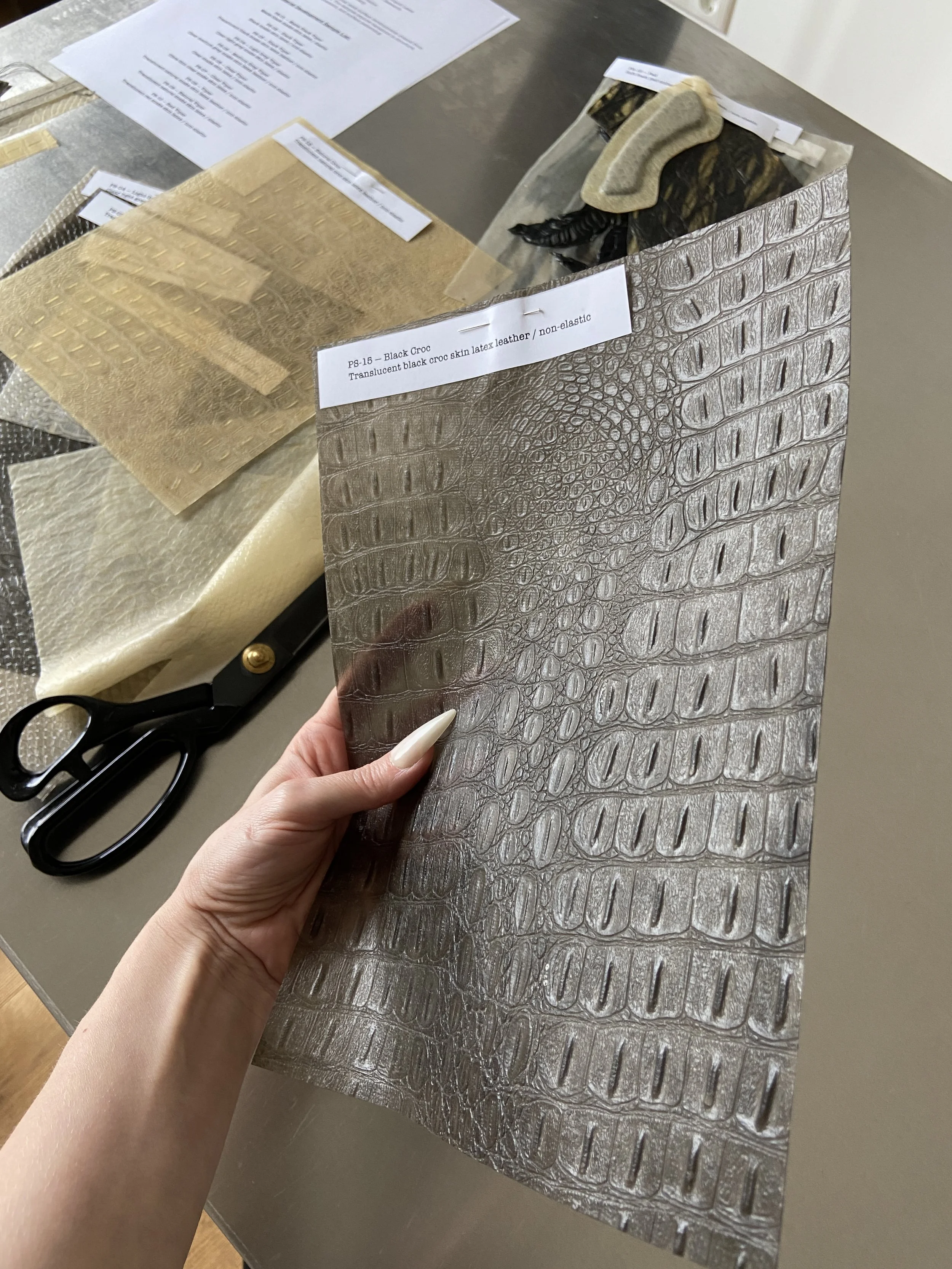
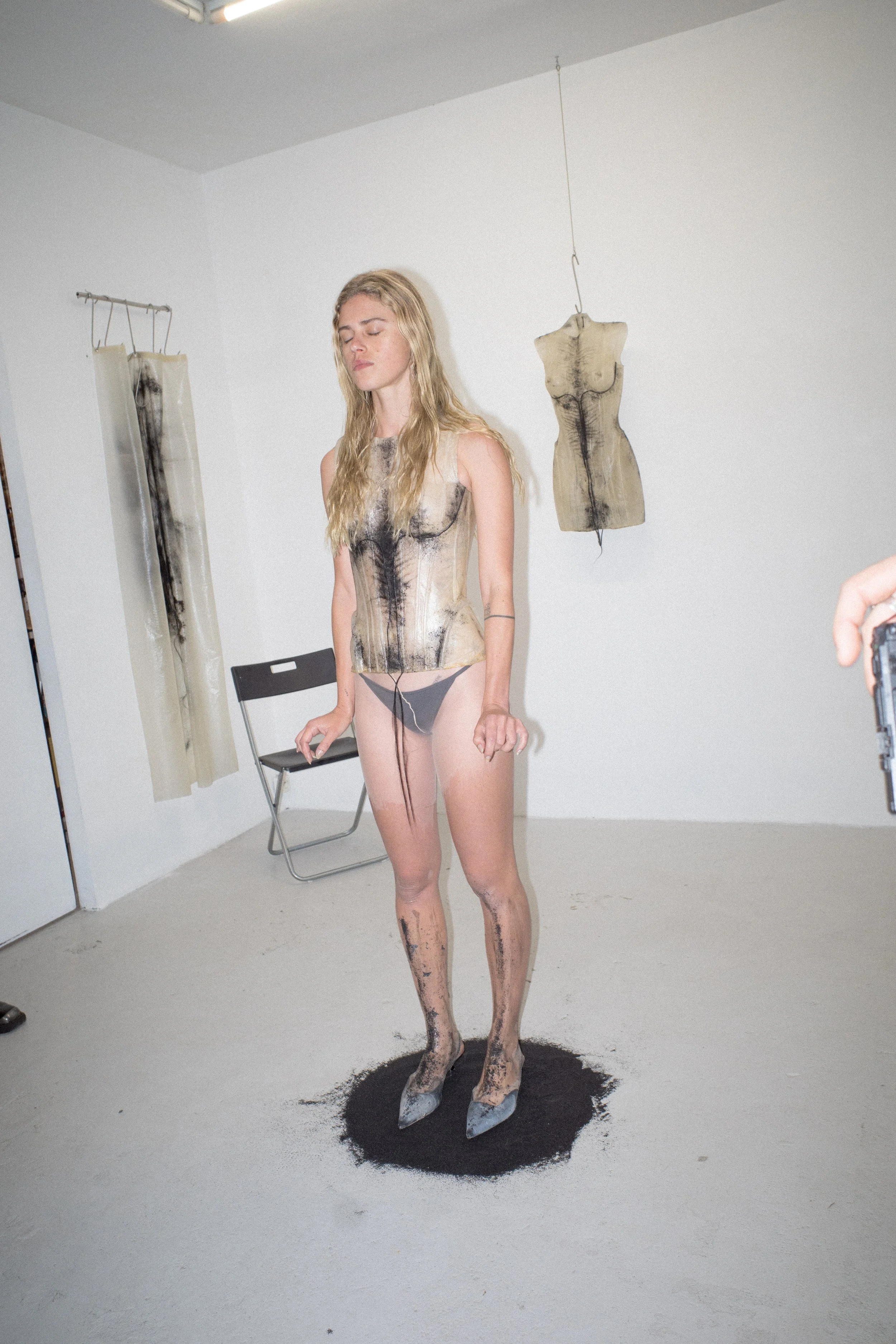
I don't harvest the latex myself. I source it from an great supplier who provides a highly specialised liquid latex that is available only in very limited quantities, depending on the harvest and climatic conditions. This particular latex is exceptionally clear, which is essential for achieving the translucency and skin-like quality of my work.
I also value knowing that it comes from a very small plantation. My initial interest wasn't necessarily driven by sustainability, but rather by curiosity about the material itself. I wanted to understand its behaviour, experiment with its properties and push it beyond traditional approaches, challenging what people generally associate with latex and exploring what else it could become.
At the same time, sustainability is something I care about and consider in my practice. I appreciate that natural latex is derived from a tree, but I'm also aware that it isn't grown locally, so I don't want to make exaggerated claims about its environmental impact.
That said, I work on a very small scale, and everything is made by hand, by my own hands. I've also developed ways of creating latex skins directly in the shape of the pattern, rather than producing sheets that need to be cut afterwards, which helps reduce material waste. From developing the material and creating the patterns to constructing the final piece, I do everything myself. My work is either made to order, made to measure or exists as a one-of
What has been the most difficult part of your process when creating the skins?
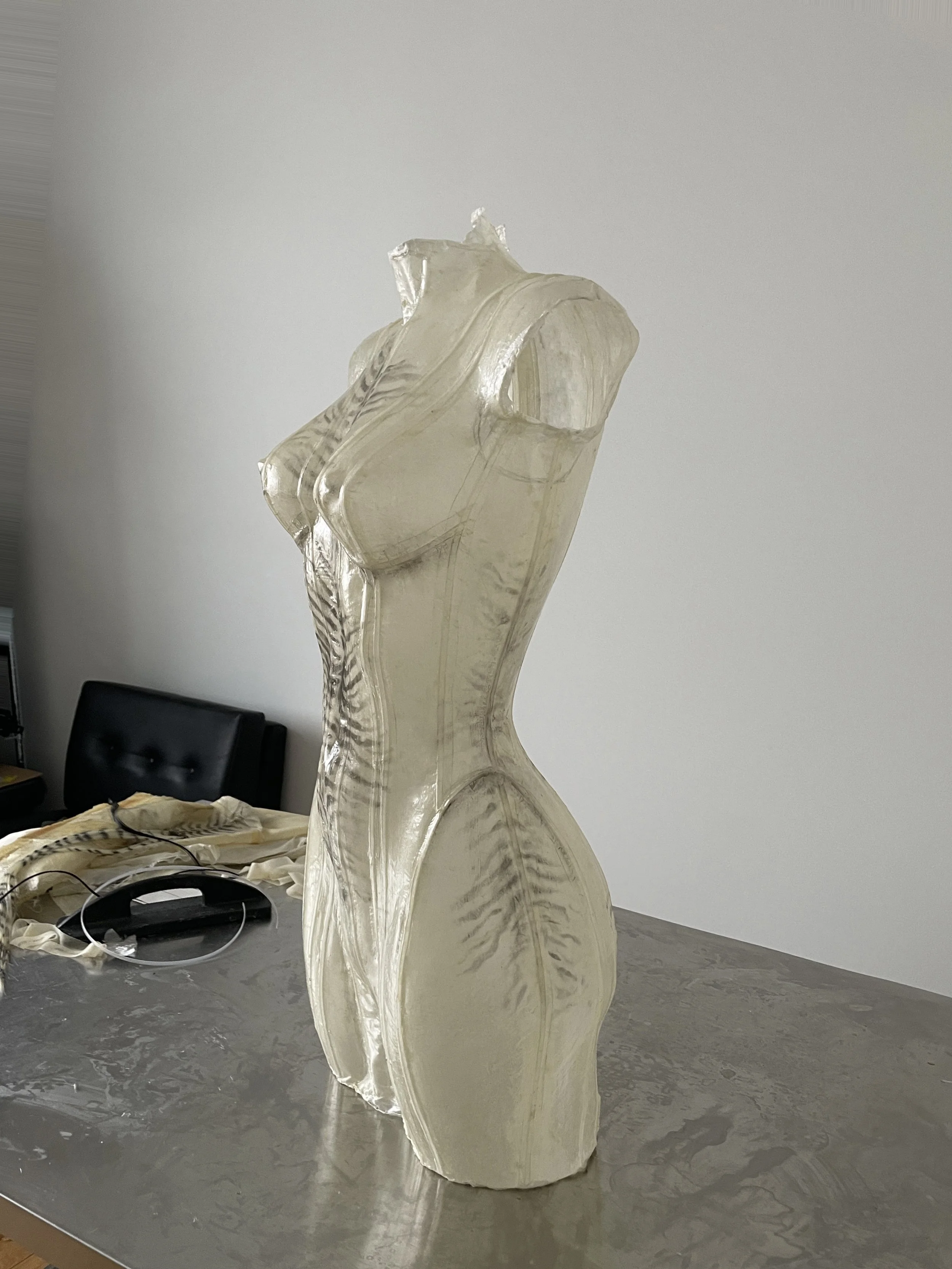
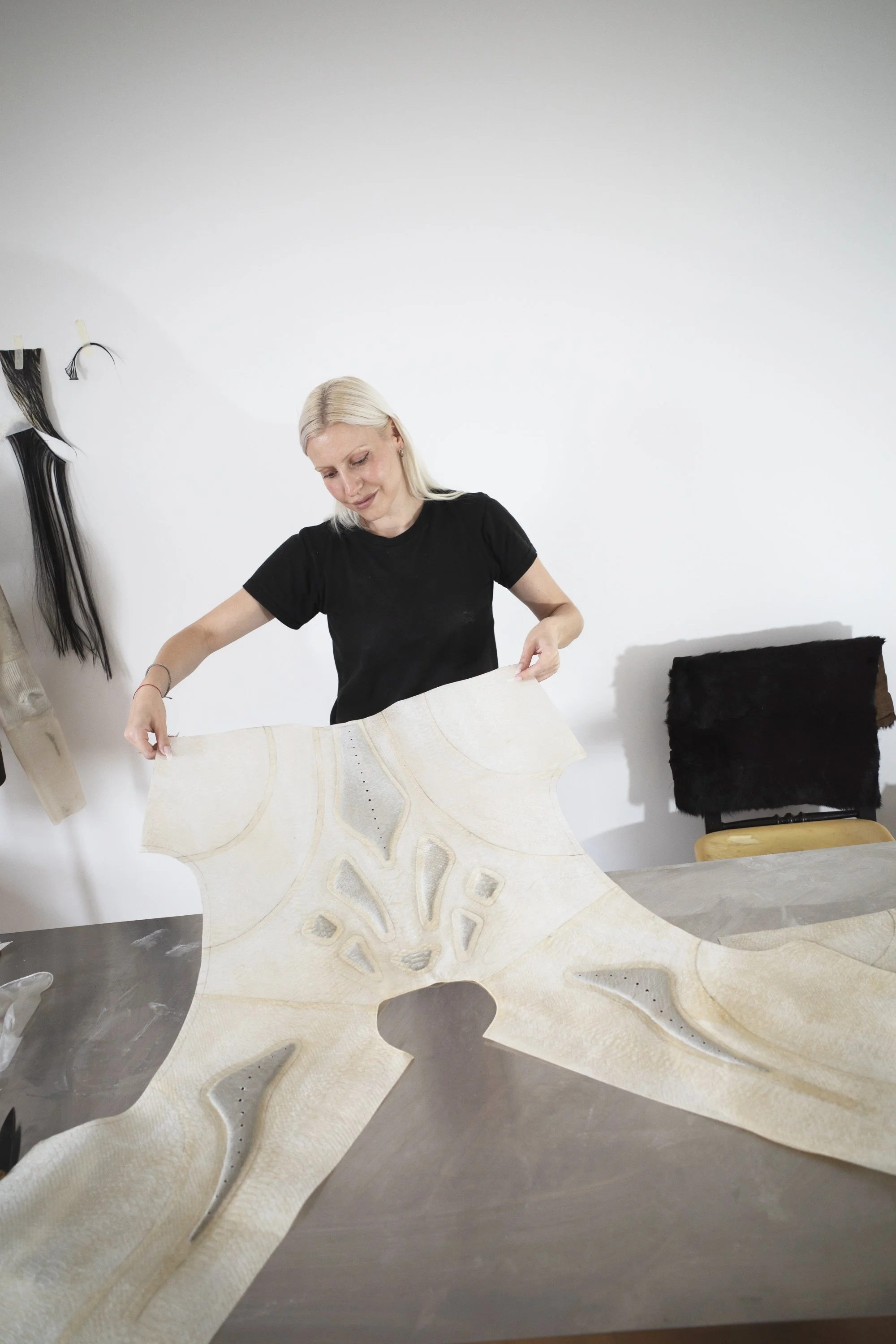
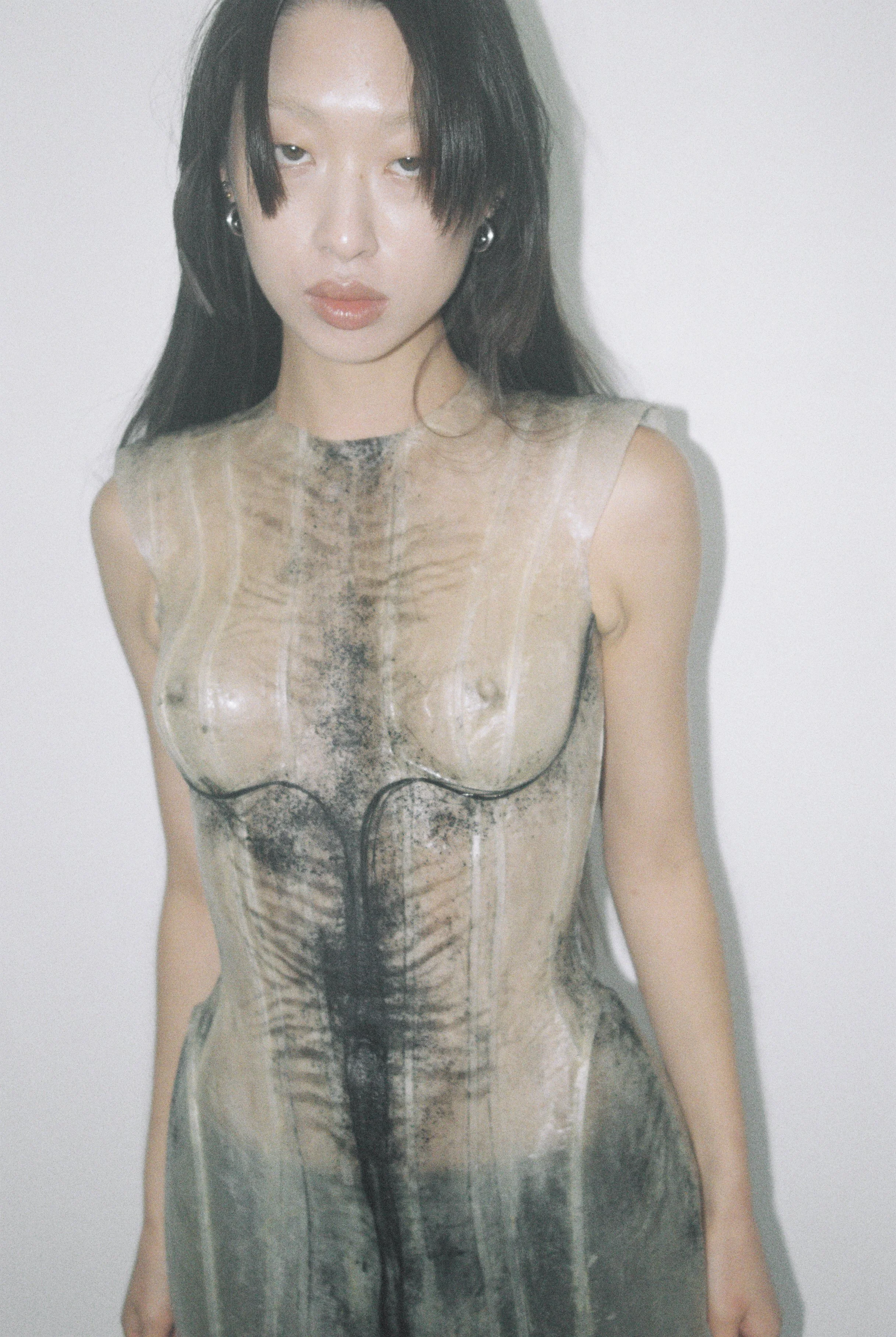
Liquid latex is a tricky material to work with. I've developed various types of skins over the years, each requiring different material properties. Some are soft, flexible, thin and translucent, while others are harder, stiffer and less flexible.
Coming from a background in fashion, I already had a strong understanding of pattern cutting, garment construction and how materials behave on the body. But working with liquid latex required me to approach these things quite differently and develop my own processes. I've always been obsessed with creating skins that behave differently from conventional latex. So I went on a journey of researching, experimenting and testing how I could treat latex to make it more leather-like while still retaining its translucency.
That's particularly difficult because these qualities are somewhat contradictory. I wanted to create a material that I could sculpt with, something that could hold its own shape and structure, yet still embody the visual qualities of thin, translucent latex. Over the years, I've developed several approaches that allow me to achieve these different material properties, and I've applied them to both wearable pieces and self-supporting sculptures.
Of course, the research is ongoing. There is always something new to test, and I don't think I'll ever consider the material fully explored. Another very important aspect is observing how the skins behave over time. Looking at pieces I made years ago and seeing how their condition has changed tells me a lot about how I can further improve the material and how best to preserve it.
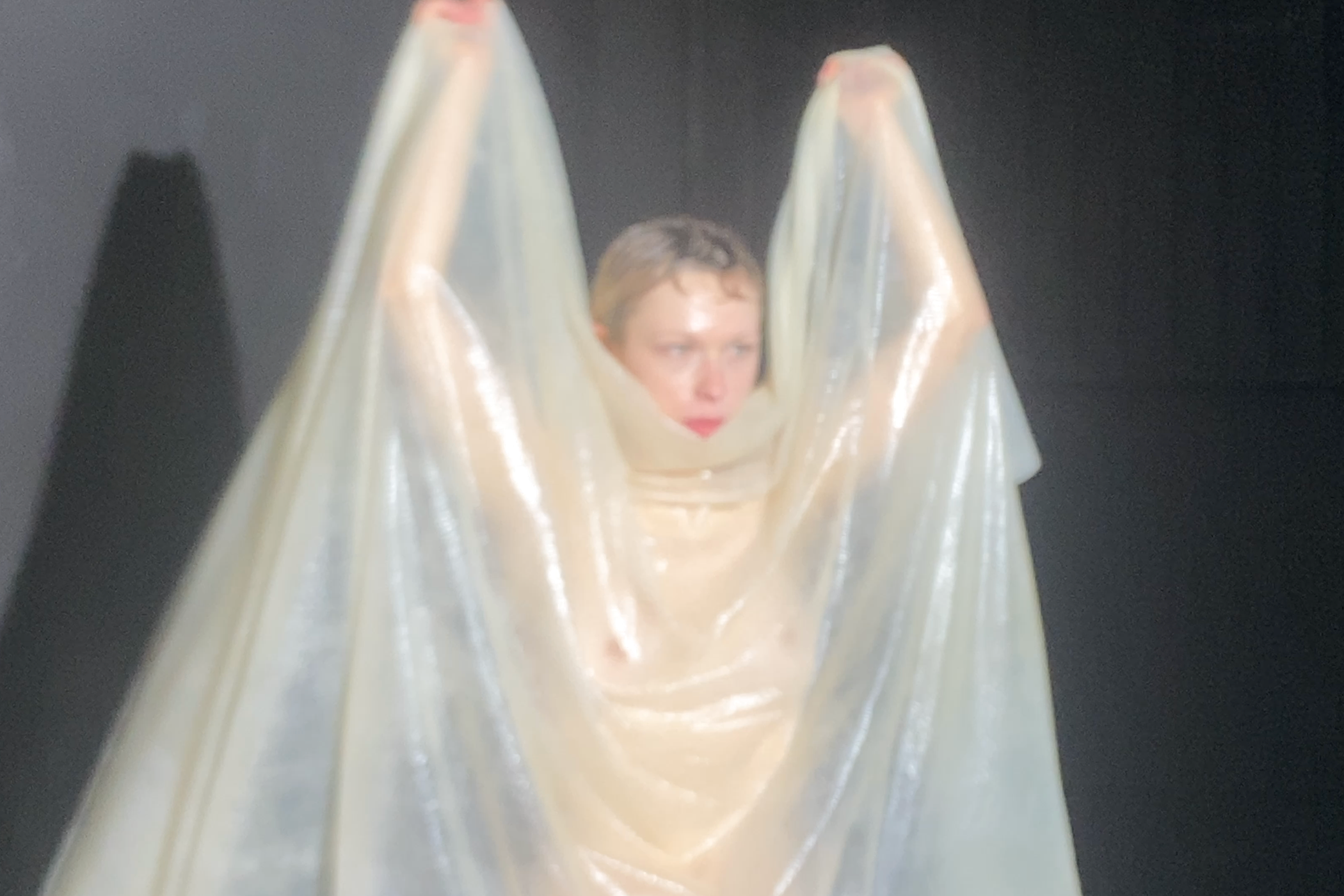
You’ve recently held an exhibit “OMEN” in Paris, that showcased your skins and wearable artifacts. At what point does a garment stop being clothing and become sculpture? Do you decide that, or does your creation in a certain time within the process?
I think it's a mix of both, because they inform each other. I work very intuitively and in a material-led way, and my ideas often develop through experimentation and the properties of the material itself.
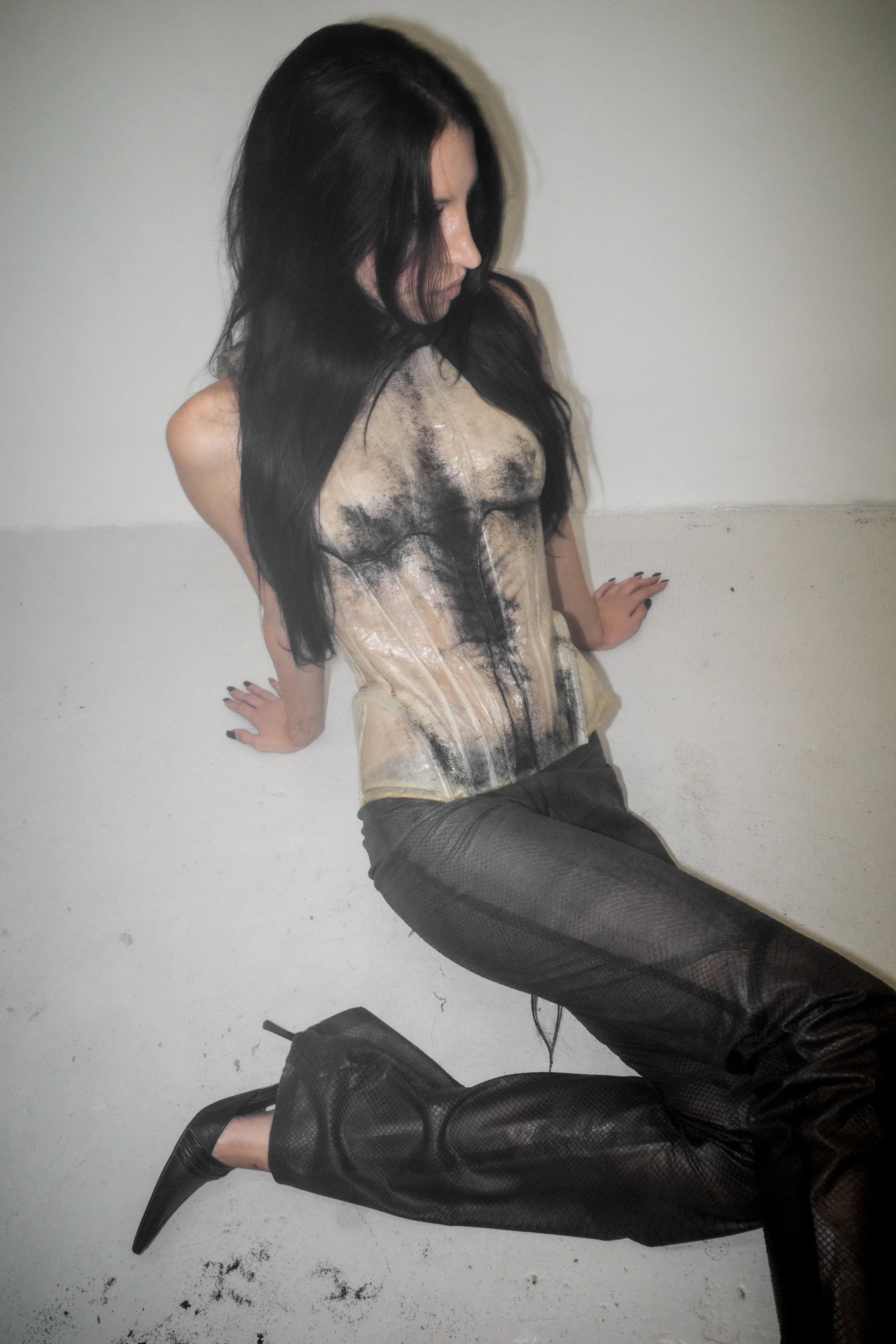
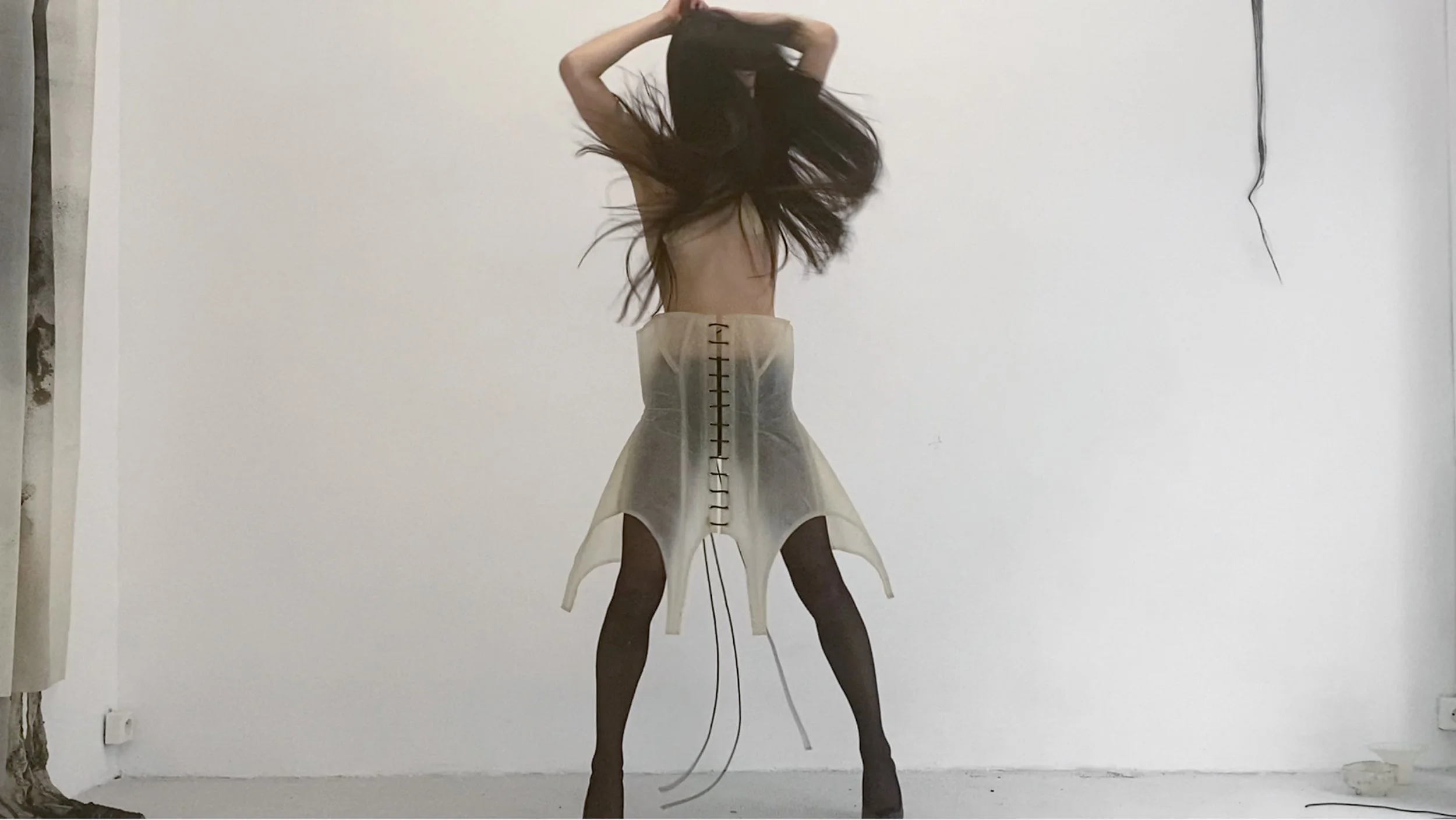
Once I was able to create sturdier, firmer latex skins, I could start working in a more sculptural way, which is a process I really enjoy. Through developing my own ways of treating and processing liquid latex, I've been able to create thin, translucent structures that can hold their own shape. I can now cast an entire three-dimensional form in a mold as a single, self-supporting piece, without relying on conventional pattern cutting or assembling separate pieces to construct its shape. For me, this opened up entirely new ways of creating.
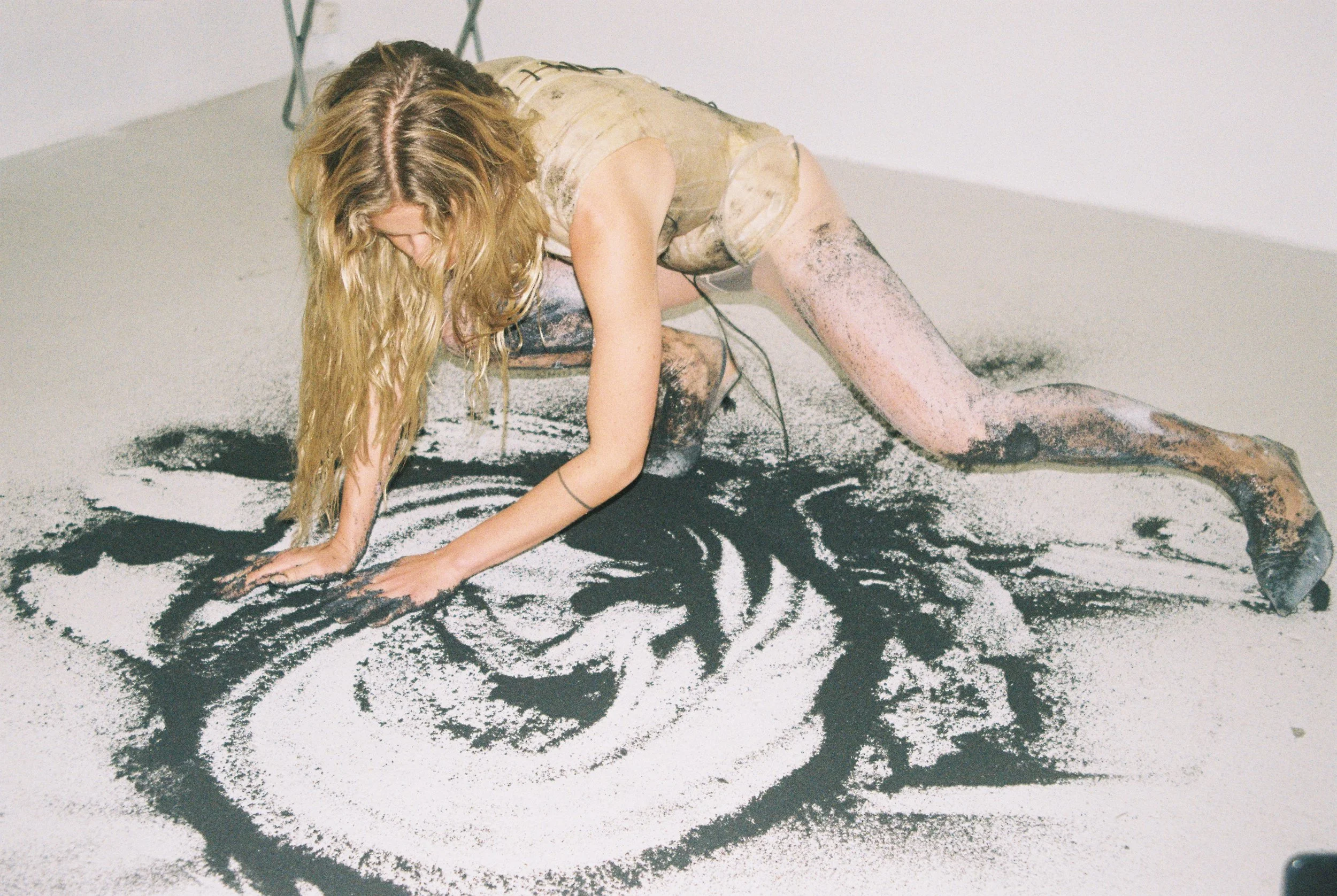
Coming from fashion, I was used to thinking about the body through patterns, construction and wearability. Developing these self-supporting latex structures allowed me to approach the body differently, moving beyond conventional garment construction and into wearable sculpture. What interests me is also the contradiction within these forms. They can appear fragile, almost vulnerable, but at the same time they have something protective about them. I like that tension between fragility and strength.
I've also extended this approach into objects and vessels. It's not simply about applying latex over a surface, but about developing processes that change the properties of the latex itself. I'm interested in pushing these possibilities even further.
Which of your works do you feel is most misunderstood?
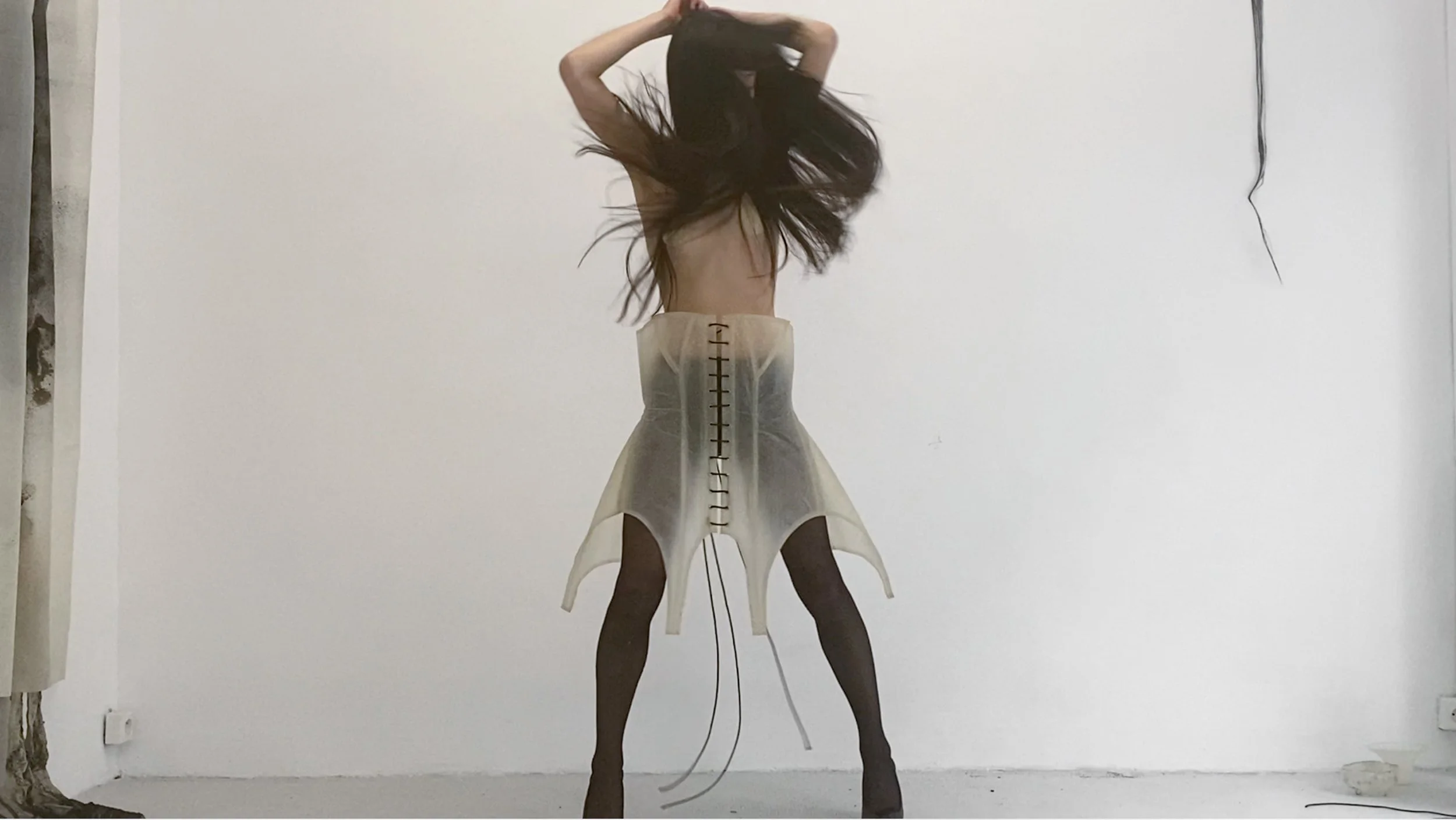
I wouldn't necessarily say one particular work is misunderstood, but rather the material itself and how people perceive it.During my exhibition OMEN in Paris, literally everyone who came kindly asked if they could touch the pieces. And I often received similar feedback: people were surprised that the skins weren't nearly as fragile as they had expected from only seeing them online.
I find it interesting how people perceive my work. I'm happy that the fragility and vulnerability of the material come through visually, but it's fascinating to see how differently people react when they experience the pieces in real life. Often, people aren't quite sure what they're looking at initially, and they bring their own interpretations and associations to the work.
What I found particularly valuable was seeing how positively people reacted when they realized that the skins are actually very thin, yet surprisingly strong. I think that contrast between apparent fragility and actual strength is one of the most interesting qualities I've been able to develop in the material.
This experience also encouraged me to do more in person, whether through studio visits, installations or presentations where people can touch the pieces, interact with them and have a sensory experience. Bringing people together, having conversations and seeing these interactions happen so naturally was something I really loved about the exhibition in Paris.
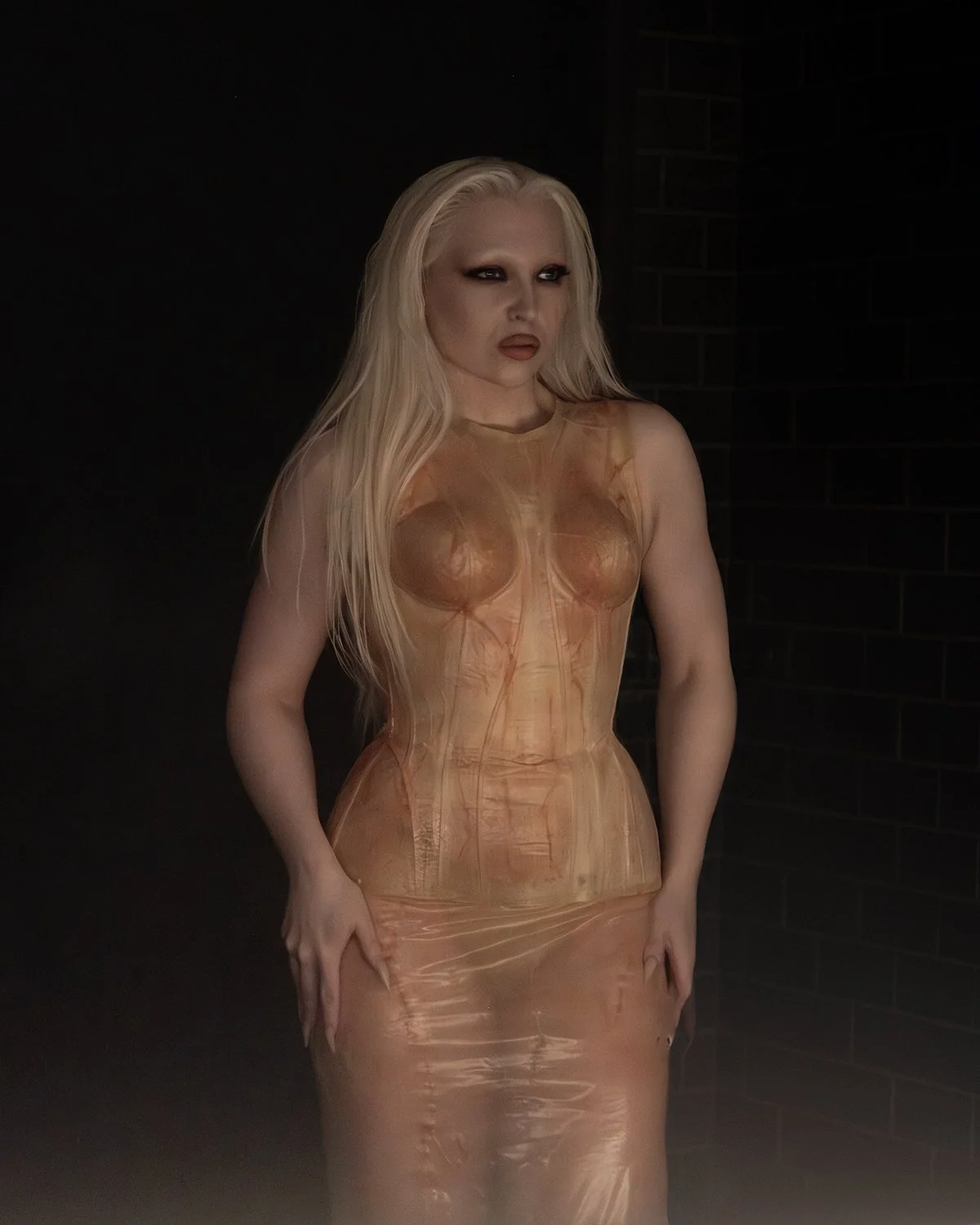
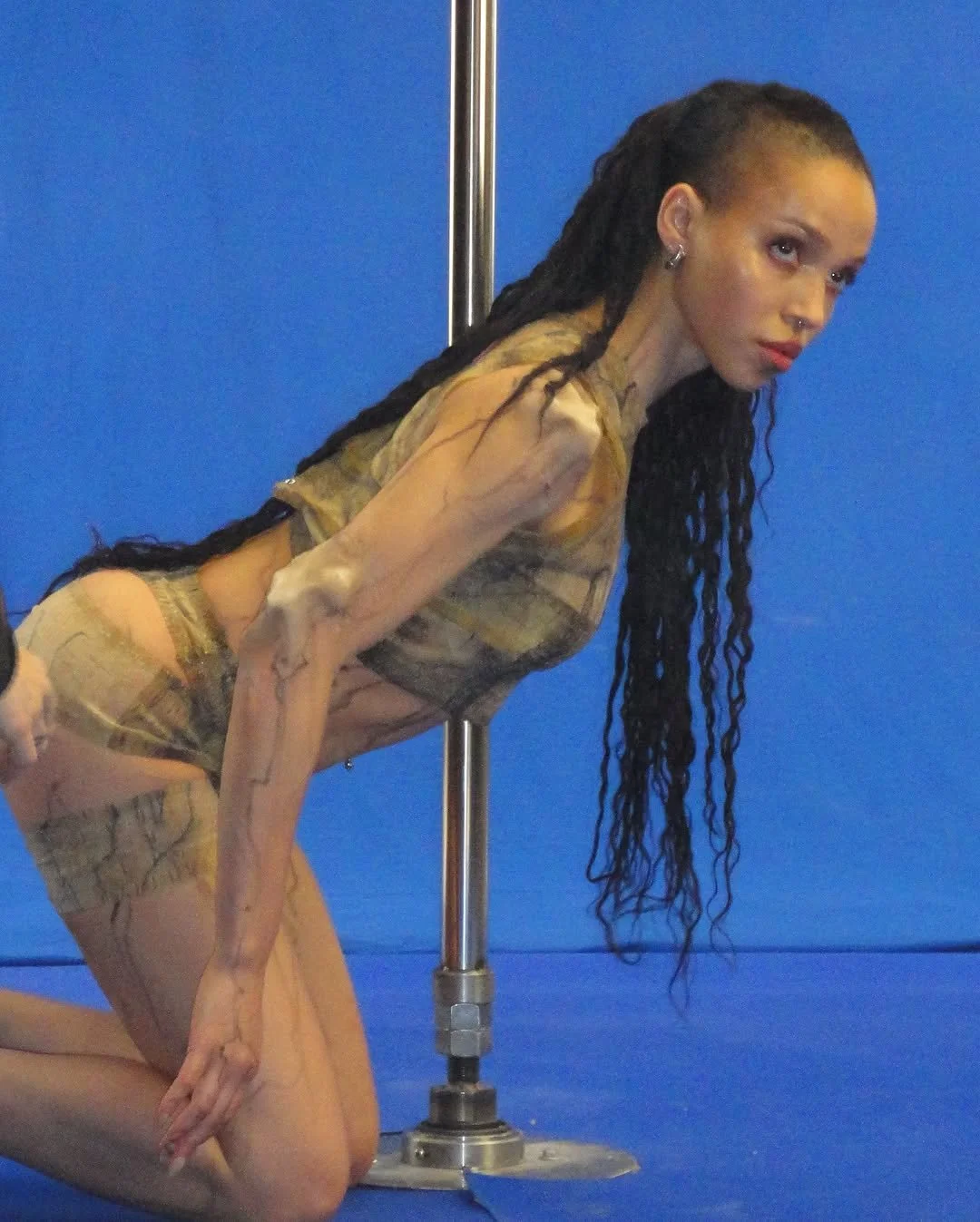
You’ve been experimenting with skins on shoe wear. Do you hope to expand the skins to more footwear or other apparel?
Yes, I've worked with UGG Europe, customising two pairs of shoes with my latex skins and incorporating a tattoo-inspired concept. I really enjoyed working on footwear, and it made me curious about how I could apply the material properties I'd developed to something more functional.
I've since developed this idea further by experimenting with high boot covers made from strengthened latex that behaves more like translucent leather. The concept is a bit like a mix between galoshes and riding chaps, creating a kind of second skin that can be worn over different pairs of shoes.
There is an idea of protection, yes, but also the possibility of easily layering and transforming an existing shoe into something completely different. I'm continuing to develop their wearability and explore how far I can take the concept, both as a functional piece and as a sculptural object. So there's still a lot for me to explore and develop.
PATH
-
PATH -
Are there other “skins” you hope to mimic in the future?
There are so many ideas, surfaces and textures that I find incredibly interesting. I love observing patterns and organic structures that already exist in nature. At the same time, I don't necessarily feel the need to mimic them. I'm much more interested in adapting them, building on them and developing them into something of my own, rather than simply replicating what already exists.
There is still so much to explore, and I'm increasingly interested in developing my own surfaces and three-dimensional forms to create moulds from. Rather than reproducing existing textures, I want to continue building a material language that becomes recognisable as my own.