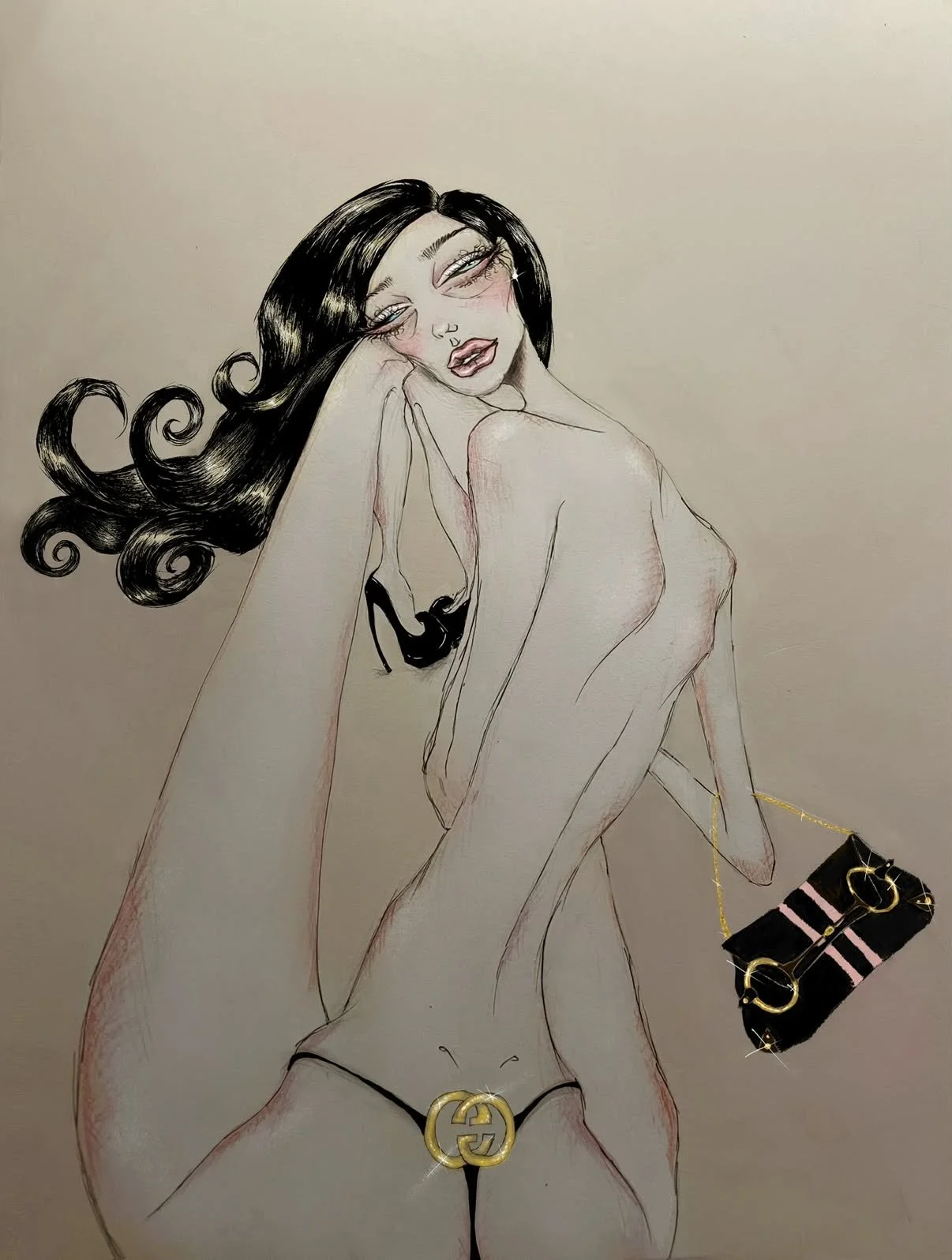
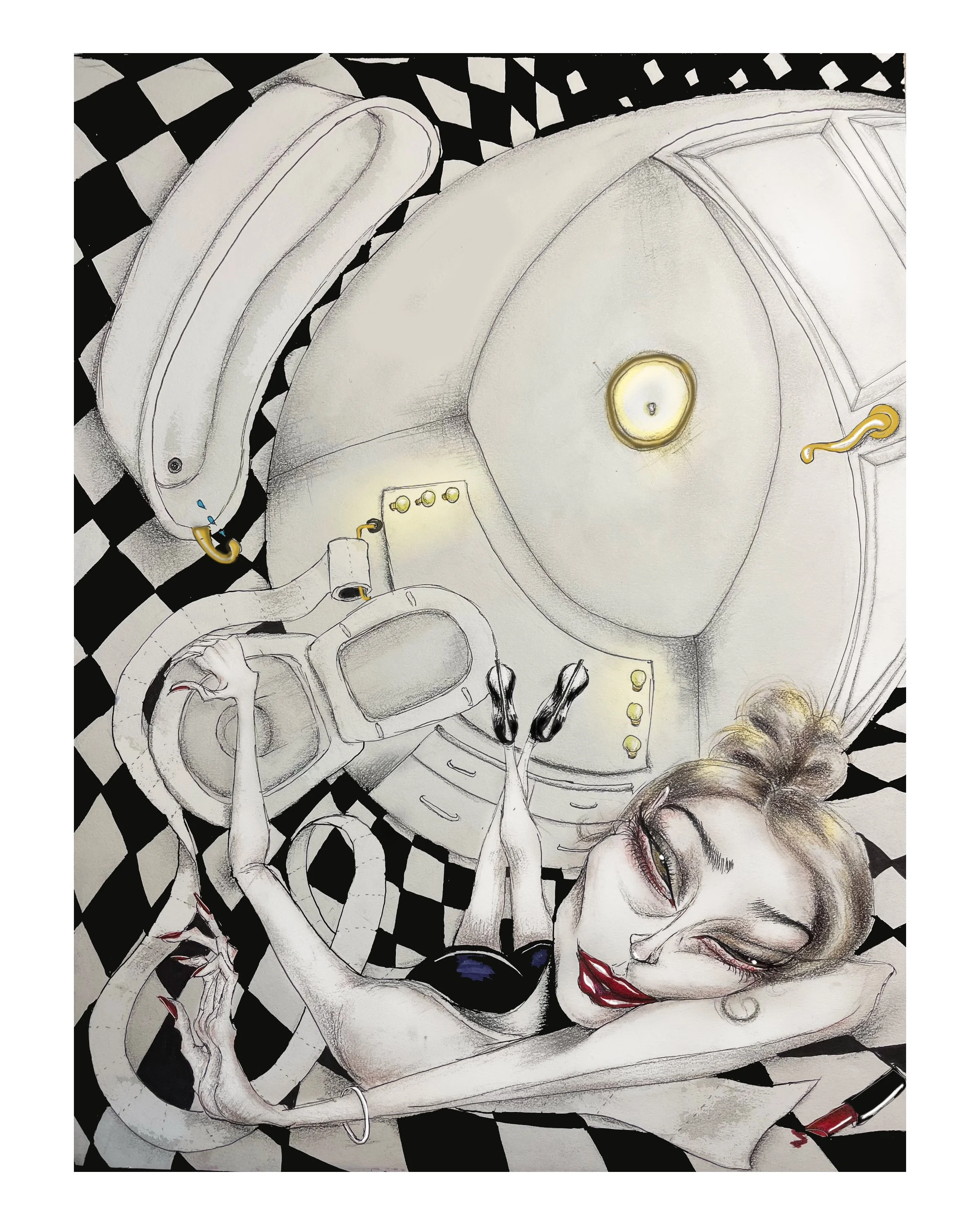
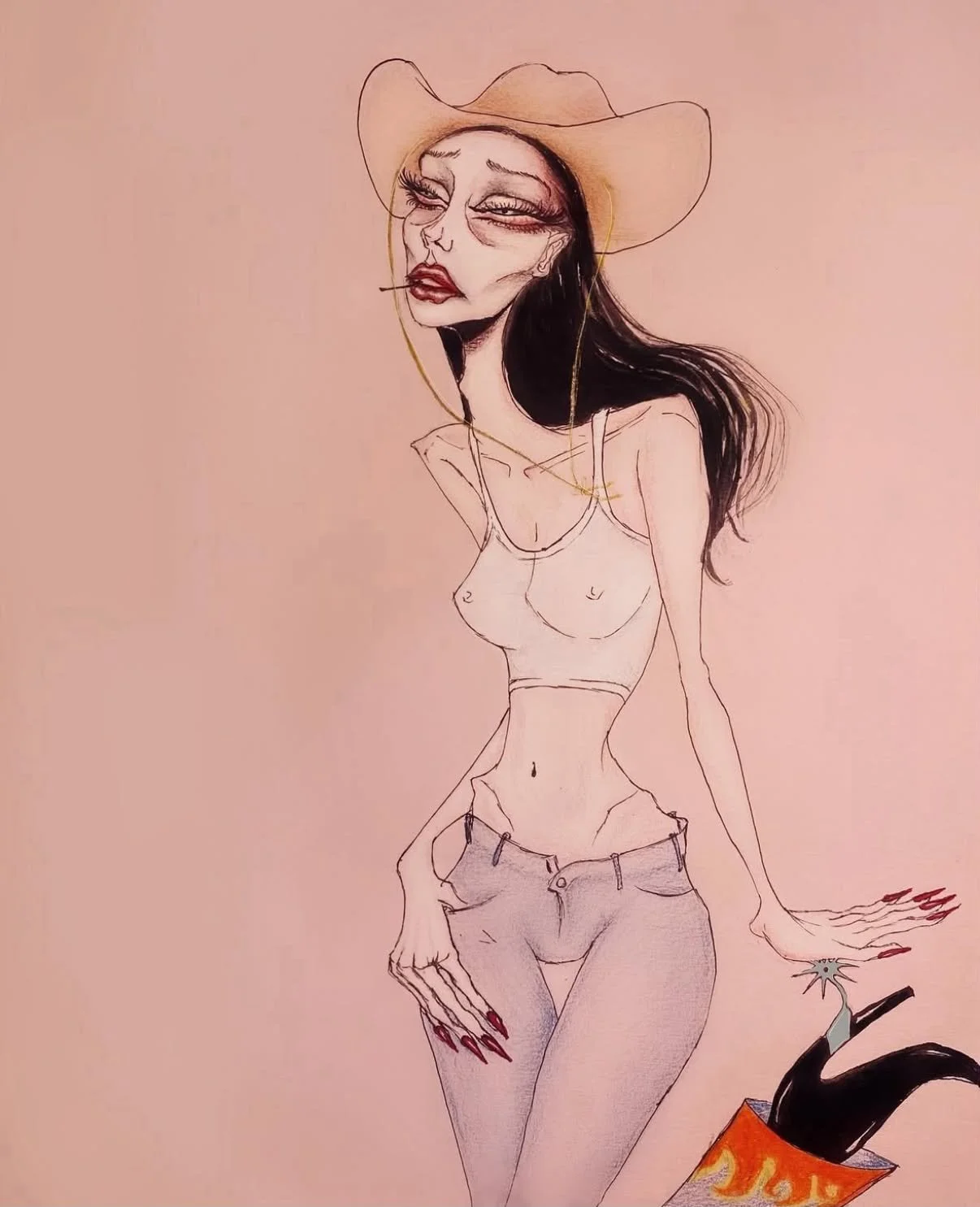
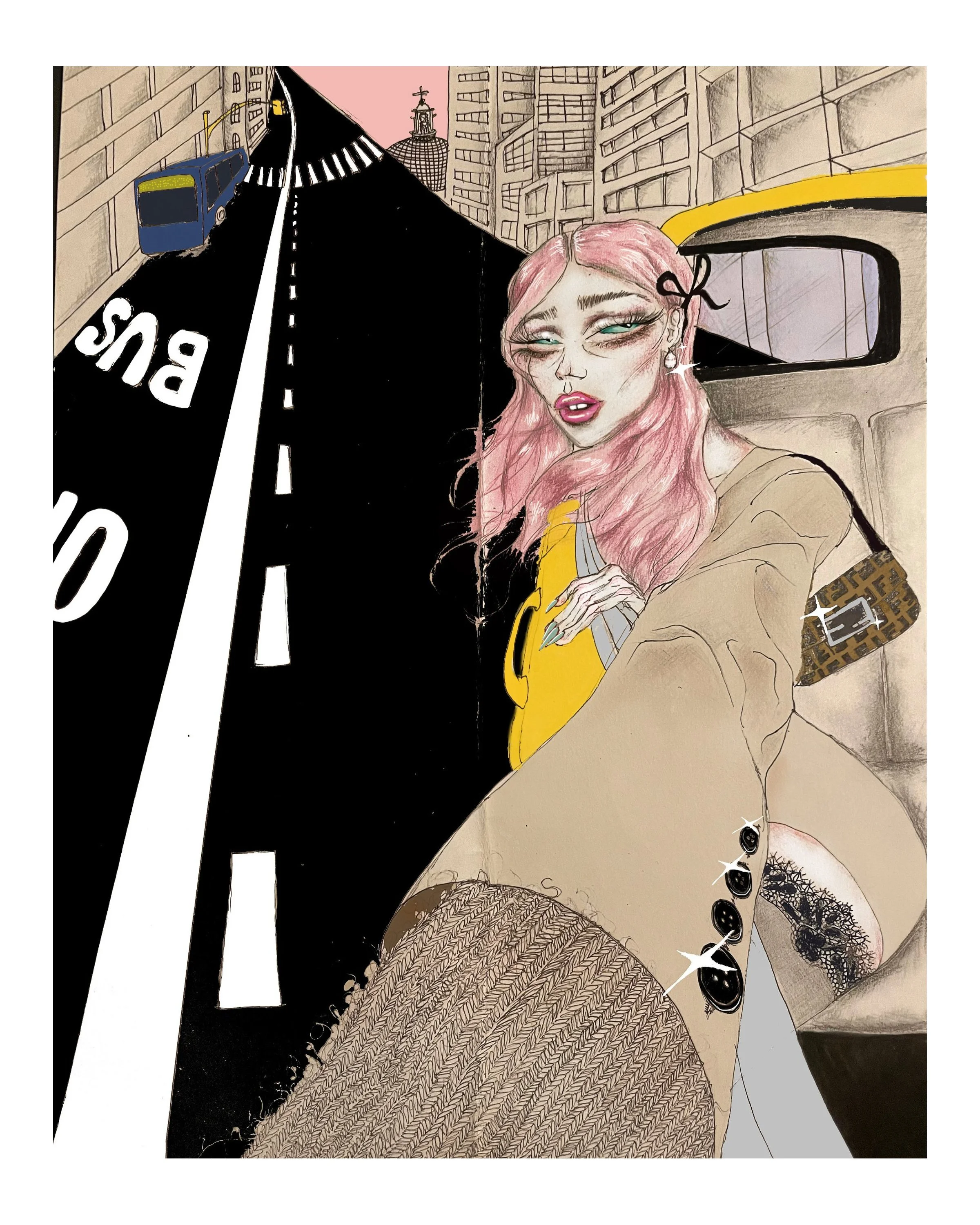
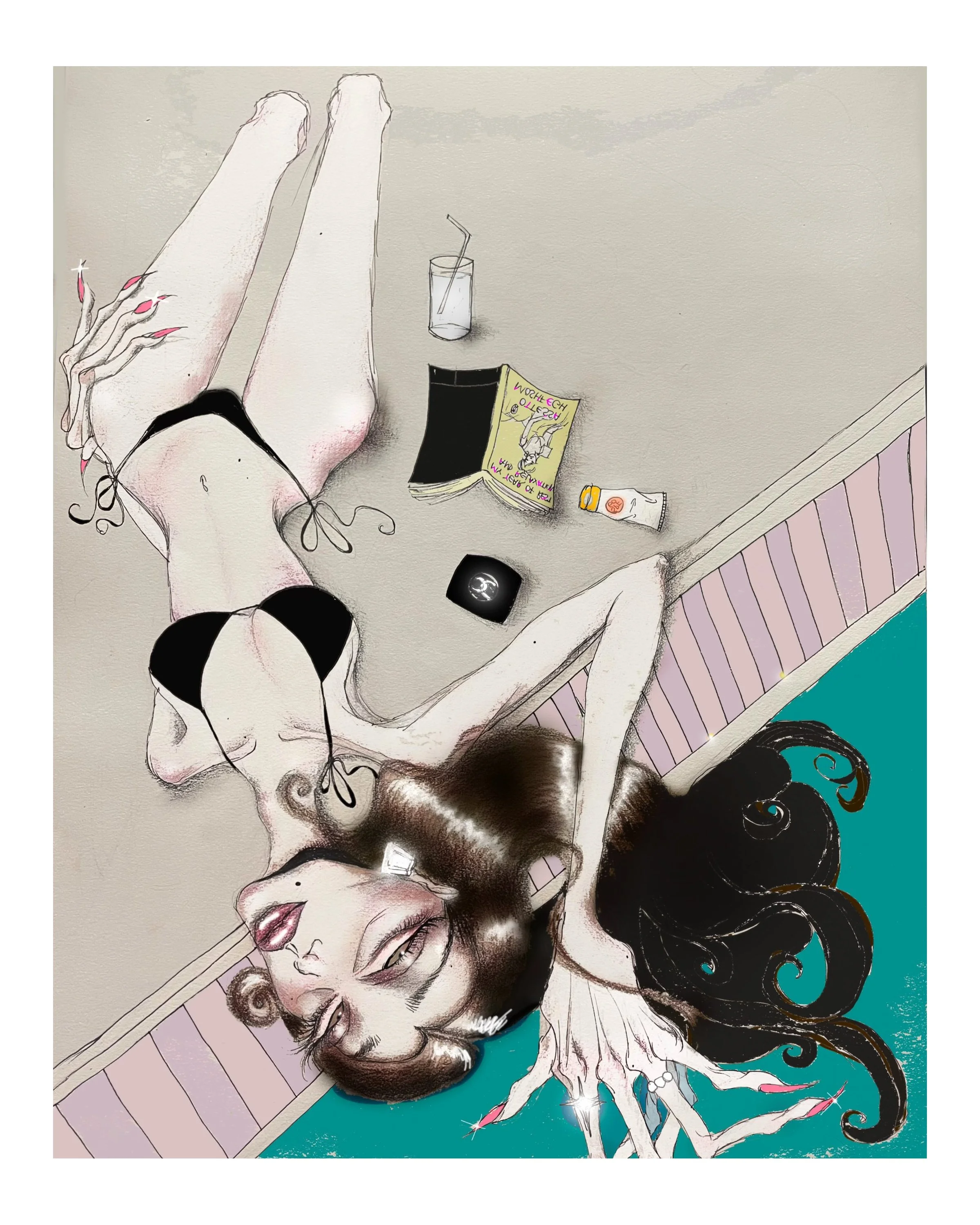
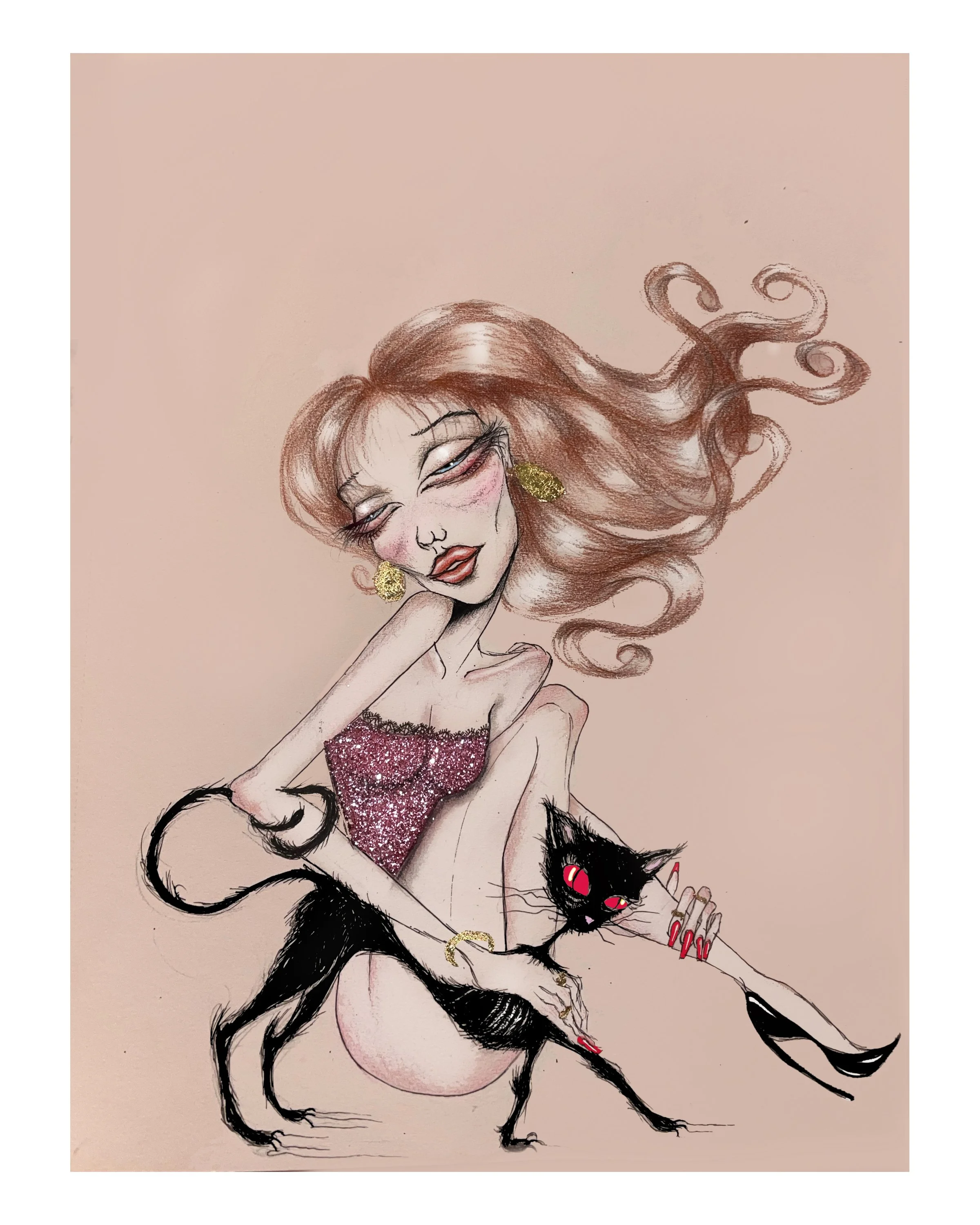
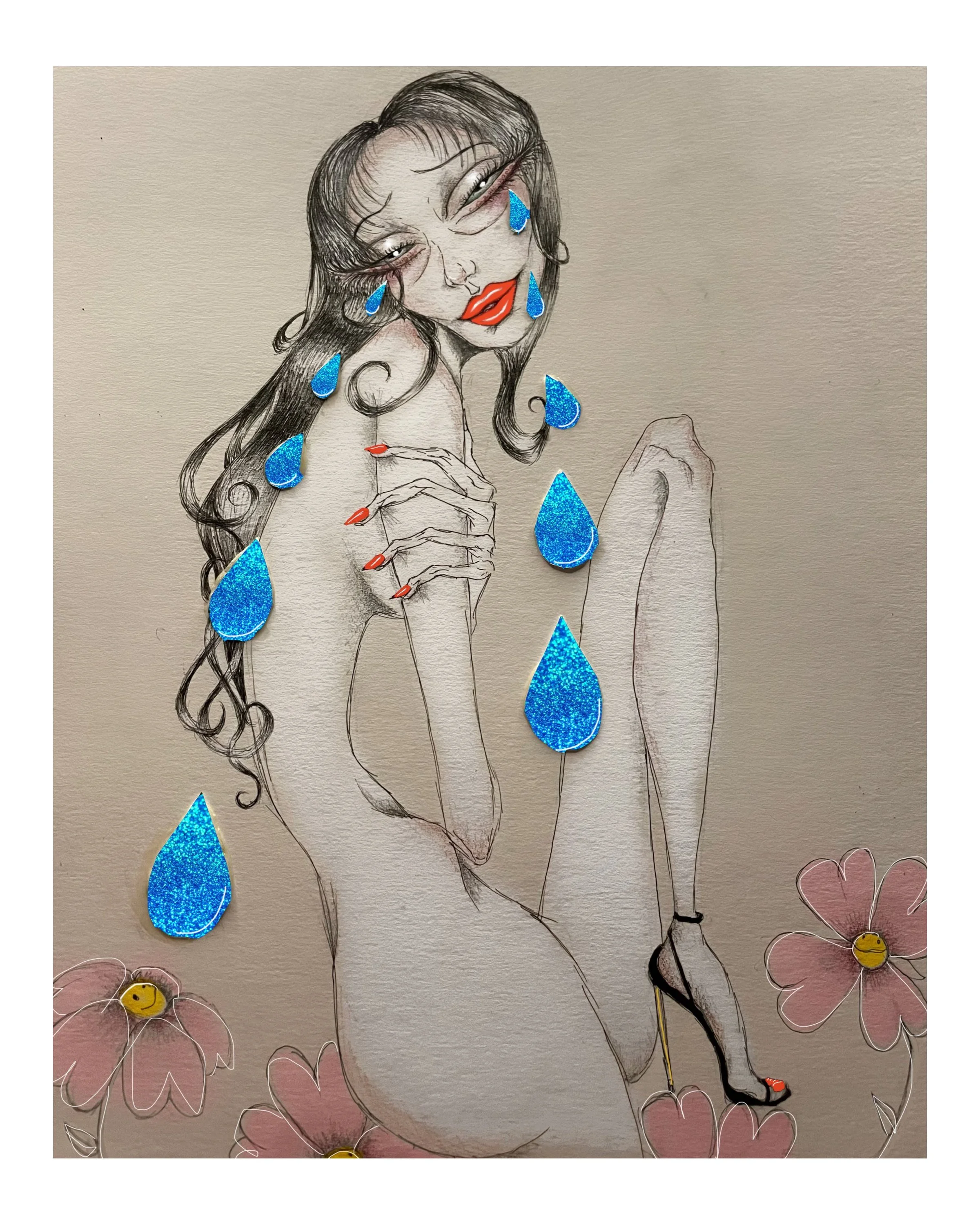
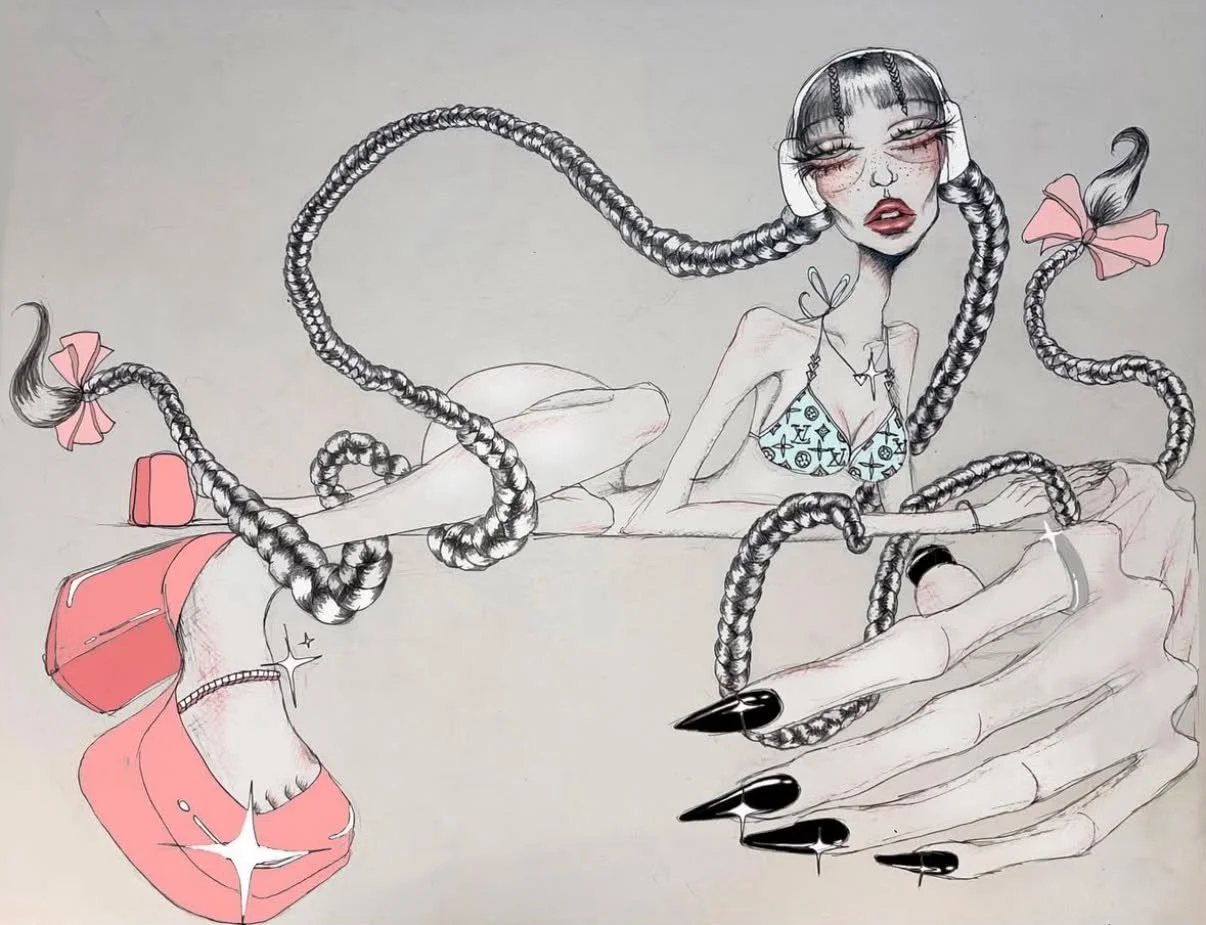
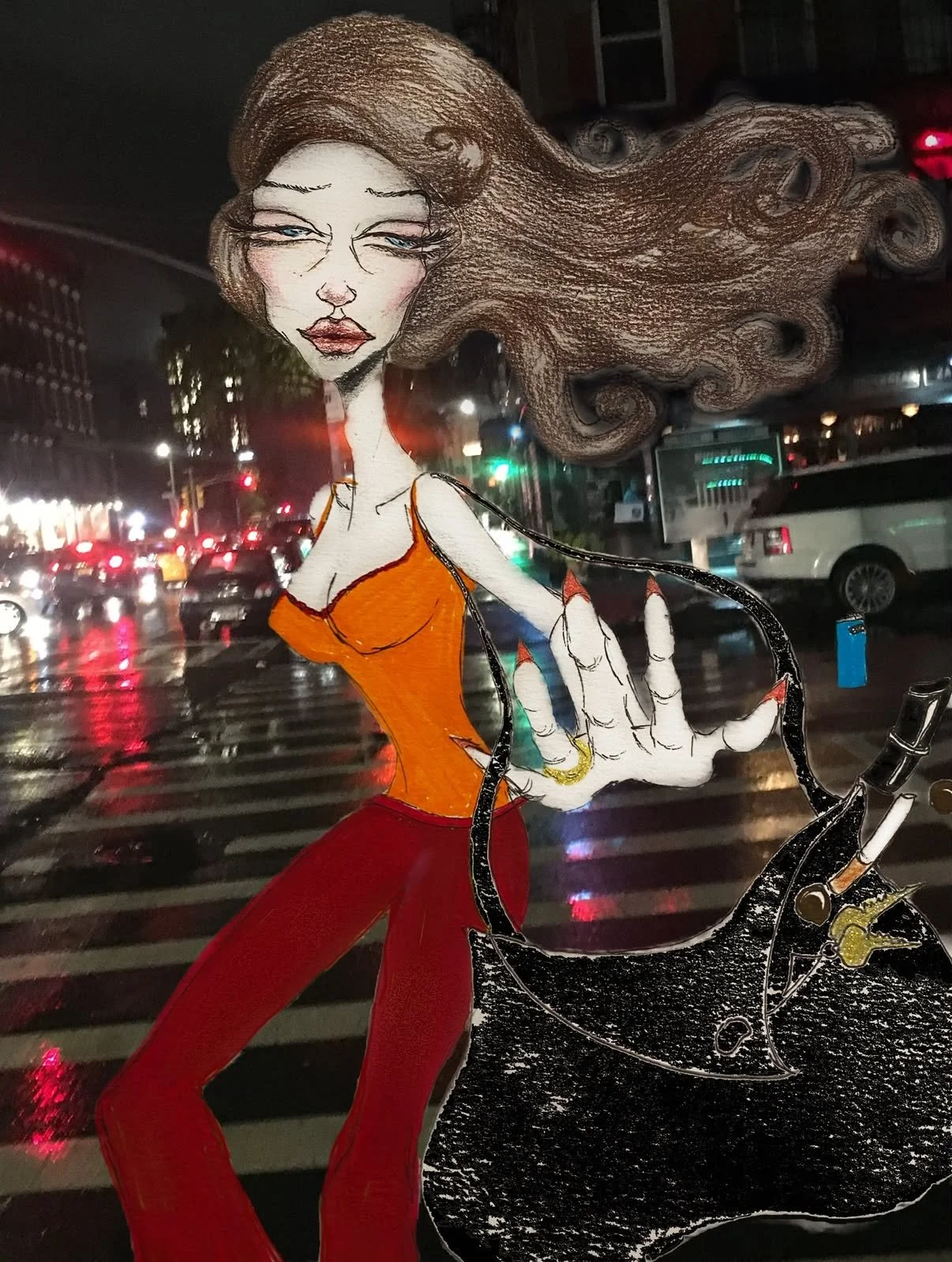
Sehej Dasan is an artist on our watch, creating mesmerizing portraits of girls that feel at once intimate, glamorous, and quietly melancholic. With blushed cheeks, heavy lidded eyes, glittering accessories, and outlandish outfits, her girls invite us to look closer: Who are they, what parts of the artist do they hold, and how much of ourselves can we recognize in them? A Parsons School of Design illustration graduate, Dasan pulls from her own experiences of girlhood, femininity, and the tension between beauty and vulnerability.
Through layered materials and expressive details, she captures the contradictions of growing up as a girl. The desire to be seen, the feelings we struggle to articulate, and the versions of ourselves we learn to perform. We spoke with Dasan about the girls who inhabit her work, the emotions behind their gaze, and her plans to launch an archival fashion-themed mail club that will give her more room to create.
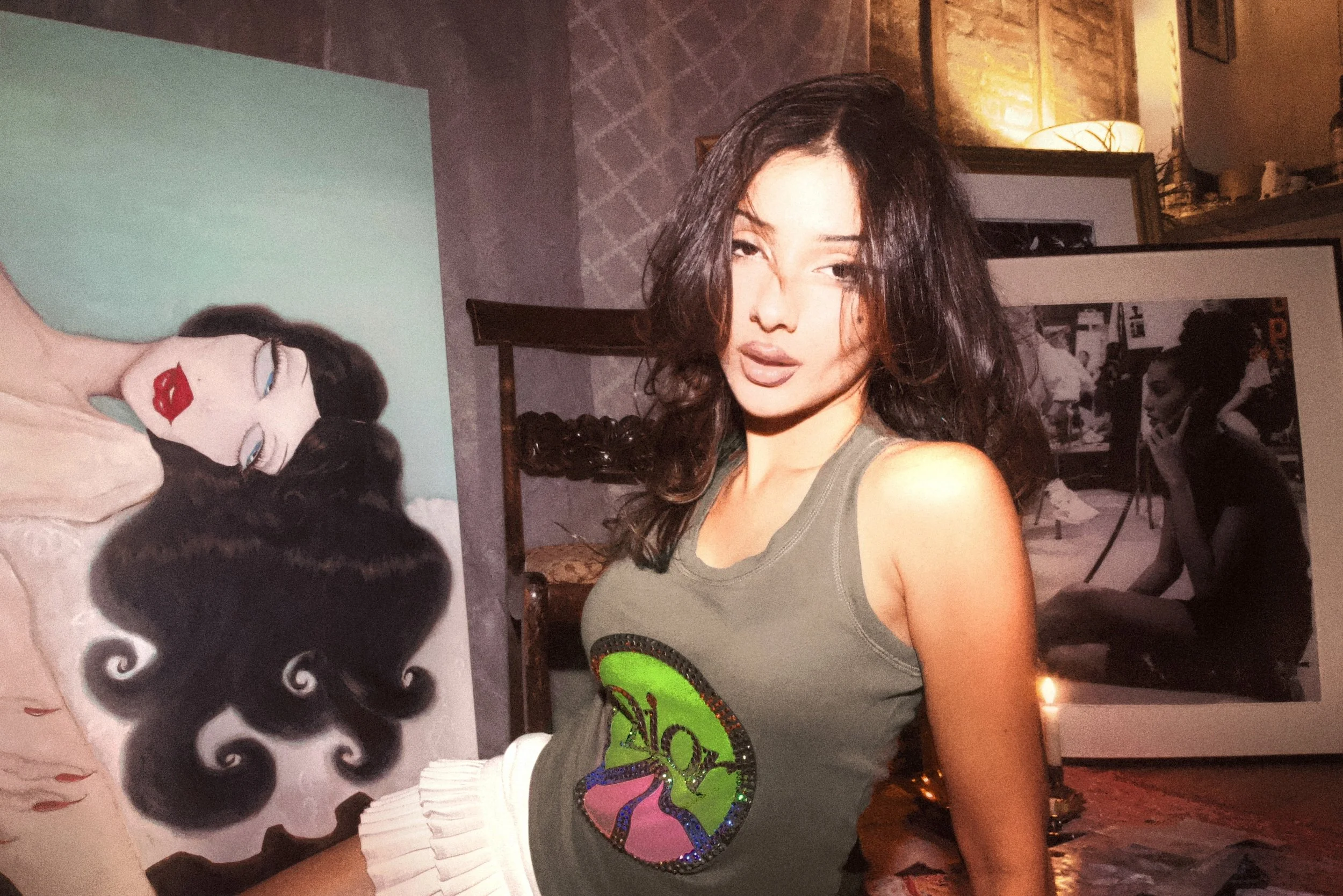
What story are you telling through these girls, and what do you want people to understand about girlhood when they walk away?
I have been drawing girls since I was three, in blushed cheeks and outlandish outfits. Beauty and fashion have always captivated me, and the drawings became a way of holding up a mirror to my inner self. Over time, the sort of spunk those early girls had turned into something more bashful. That shift is interesting to me. Those were my first candid impressions of girlhood, and in a way they still are. Hopefully people can take the expression for what it is.
Who is she to you, and how much of her is you?
Almost all of it. There’s no reference or model. Each girl comes directly from whatever was going on in my life at the time, so the work reads a bit like a diary written in faces. They’re often carrying a feeling I wouldn’t necessarily know how to verbalize. In that sense, they’re very much an extension of me.
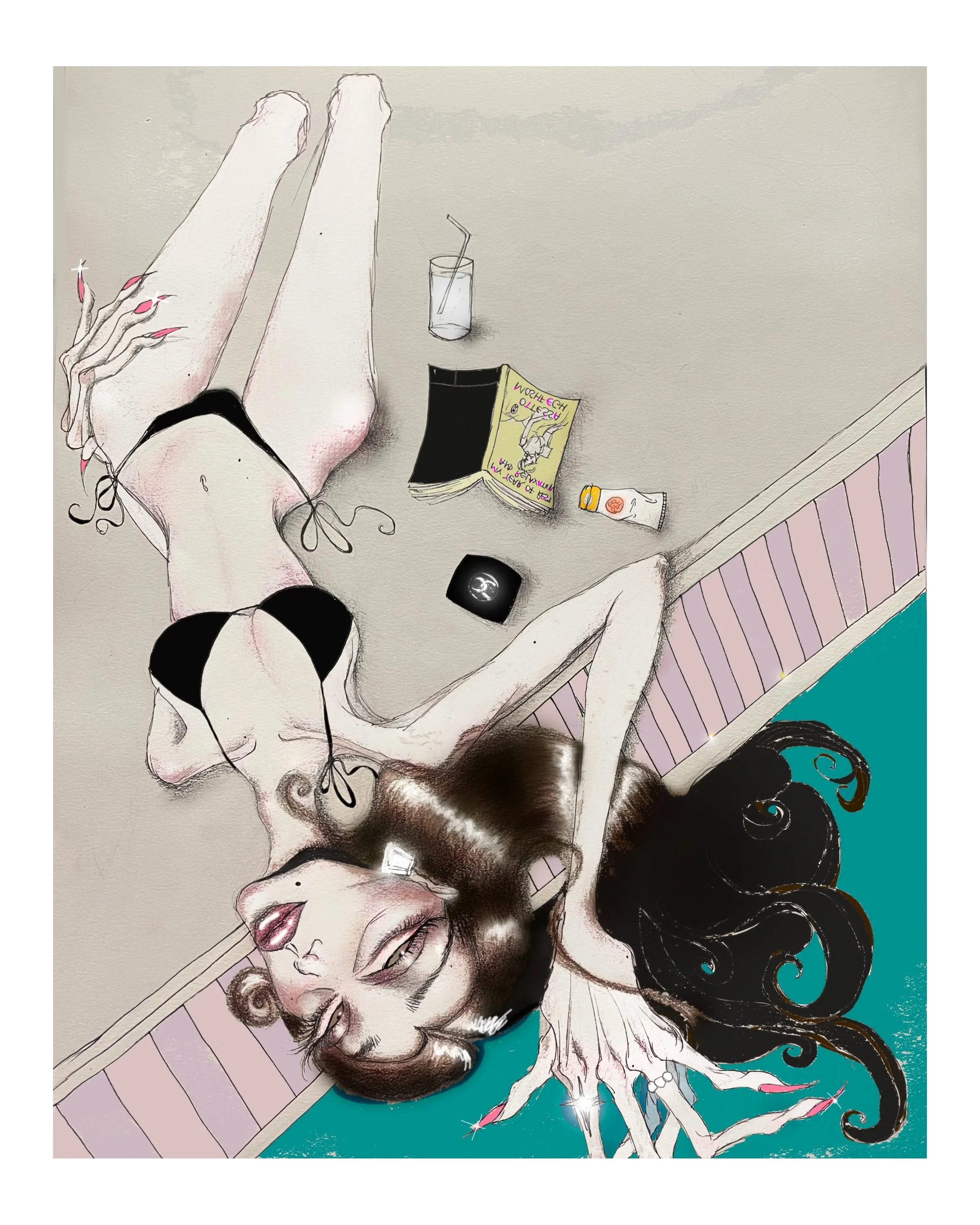
Walk us through a piece from blank page to finished. Do you start with a clear image or a feeling?
Usually I have some pent-up emotions that need release. The sketch starts loose and pulls from arbitrary things in my brain. Then I reach for materials from my hoard: a scrap of textured paper saved for years, crayons, ink, or a fabric that once sparked something. The 005 Micron pen is the one constant, of course. Every piece ends up a collage of things and feelings that were in limbo somewhere.
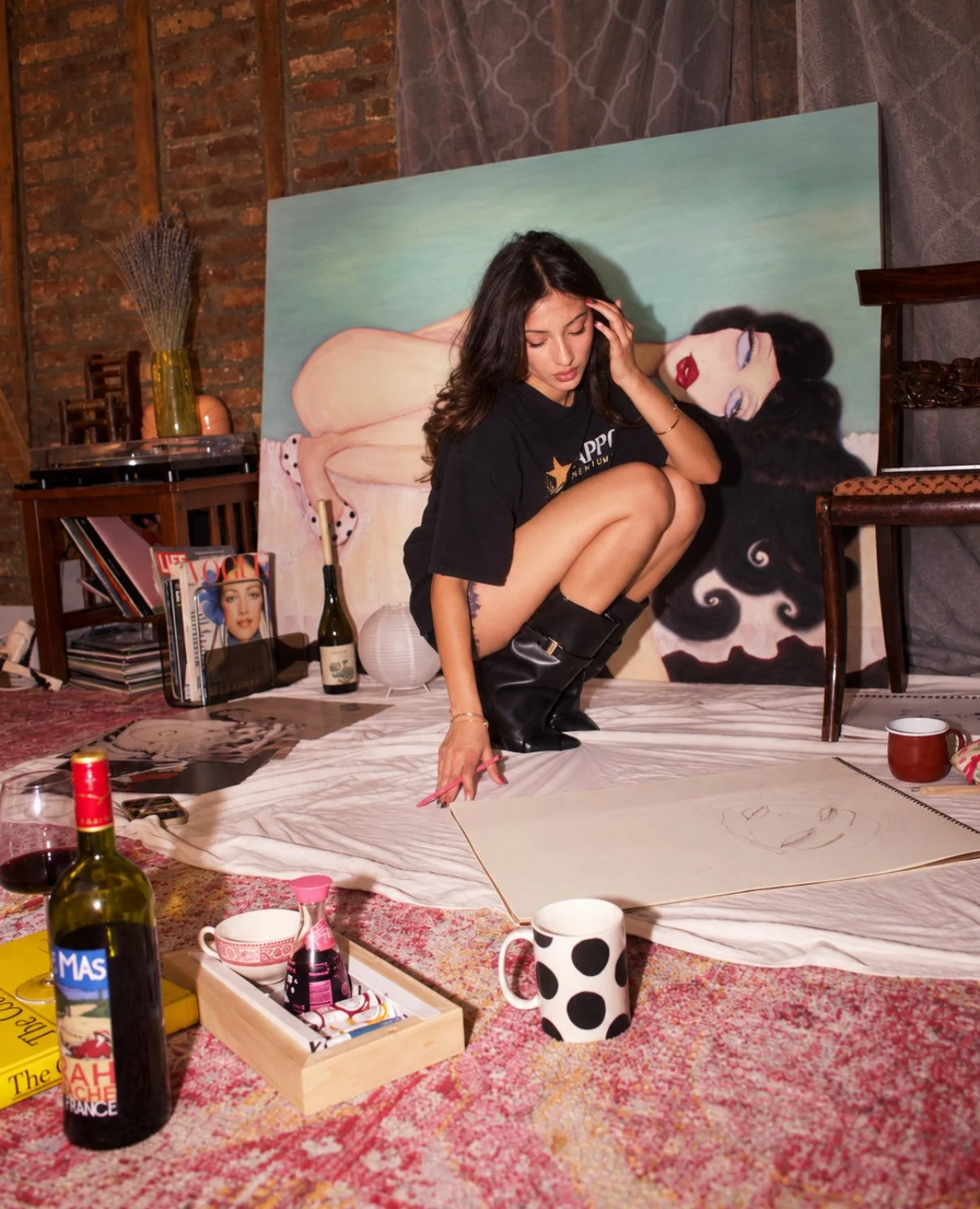
Designer bags and stilettos show up right next to tears and surreal, messy scenes. Is the glamour a mask, a comfort, or a critique?
I think glamour is complicated. I see these objects as props in the performance of femininity, but also as things we genuinely desire. Consumer culture is very good at selling women versions of themselves to aspire to. Having worked in fashion, I’ve seen how deliberately those desires are cultivated. That tension is reflected in my work. The glamour and the mess co-exist in my world. I’m curious about what people choose to look at first. Some see the heels, some see the tears, and some focus on her body. That instinct says something about what we’ve been conditioned to notice in women, and what we might overlook. But glamour is also a source of comfort for me. Beautiful objects are hard not to love, even when you’re aware of everything they represent.
Those heavy lidded eyes run through almost every piece. Are they exhausted, numb, knowing? What are they saying about how girls move through the world?
There’s a quiet sense of despair that has followed me around since I was very little, and I think it’ll always be embedded in my work. One of my professors once critiqued my work as pretentious, which I remember finding funny. Maybe it is, but when I draw, I finally stop bargaining with my feelings, I can just sit with them and see what follows as a result.
Through connecting with people who identify with femme expression and through seeing their reactions to my work, I’ve come to realize how our unseen inner worlds haunt us softly. I think the heavy-lidded eyes capture that feeling of being somewhere between numbness and acceptance, without quite knowing what comes next. None of us really have the answers, and maybe that uncertainty is part of what I’m trying to convey.
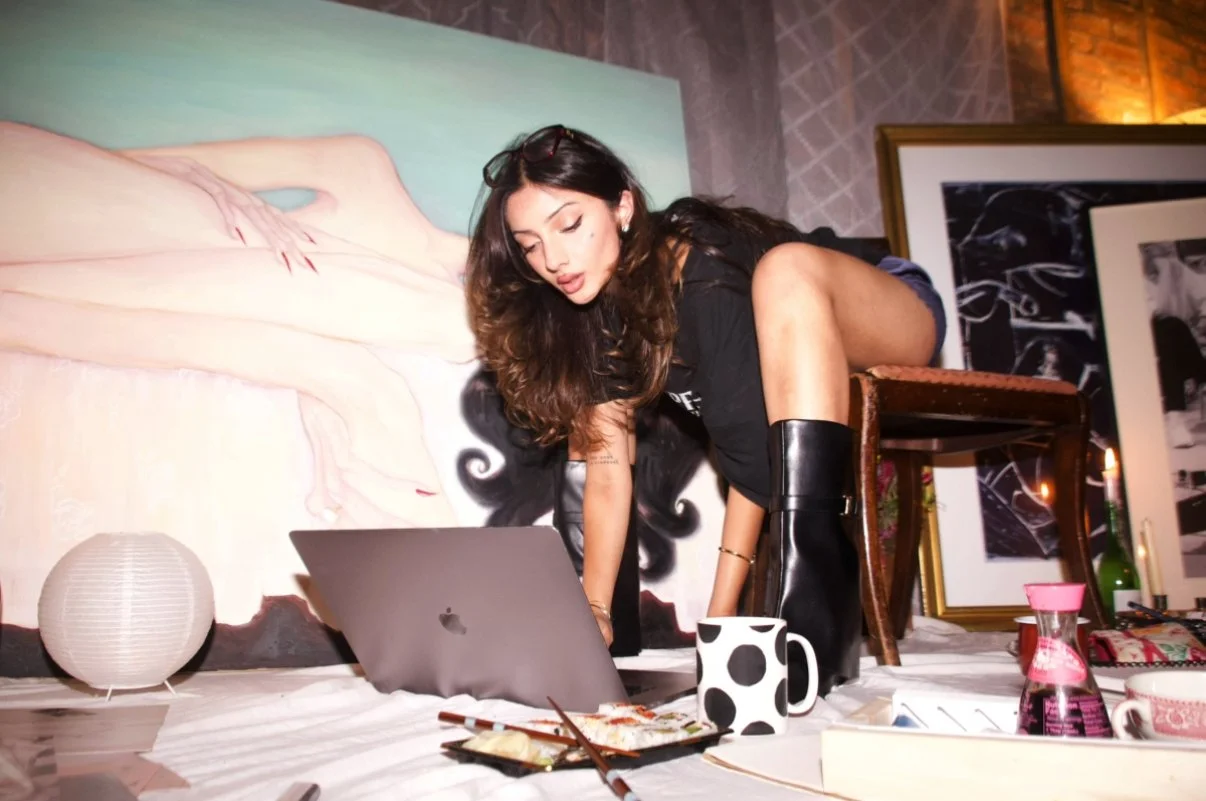
The glitter teardrops and metallic accents add texture to otherwise soft, tonal drawings. How do you decide when a piece needs that mixed media layer?
I love making a statement. It’s similar to my style in real life. Layering makes a piece more interesting to look at, I like how it can draw attention to certain parts or balance an image when needed. I have a lot of fun drawing the exaggerated hands, long red nails, shiny shoes, and sparkling jewelry.
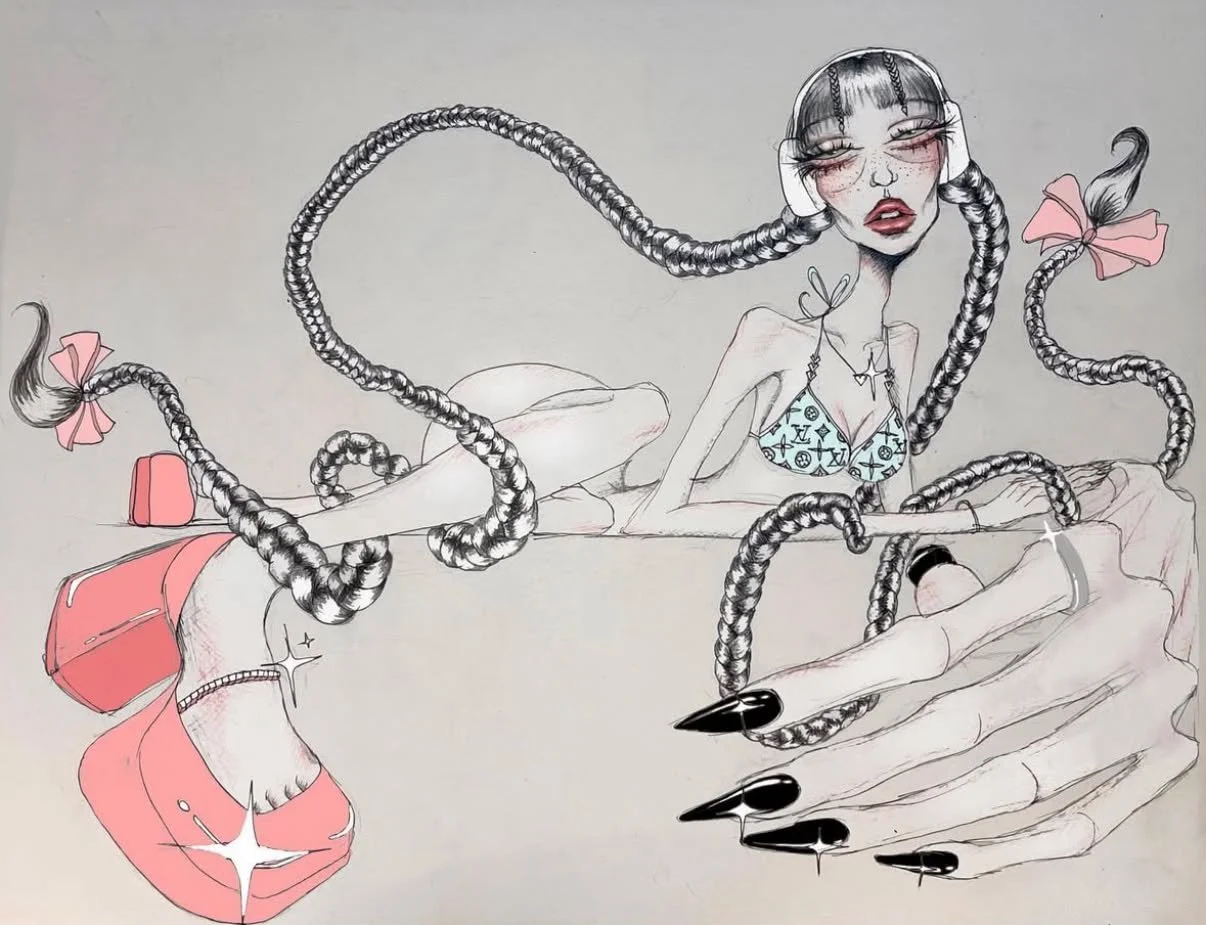
What feels different about being a girl right now compared to the generation before us?
With Indian roots and a childhood split between Orlando and a satellite city next to New Delhi, I grew up navigating different expectations of womanhood. Coming from a more reserved lineage, I think a lot about how much the possibilities for women can depend on the time and circumstances they’re born into.
I’ve been a daydreamer for as long as I can remember, and I think a lot of my inner world developed long before I knew what to do with it. Growing up, I lived on Tumblr whenever I was allowed access to the internet. It opened up a world of artists, images, and creative voices that expanded my sense of what was possible. Looking at my family, I’m the first to pursue art, which makes me wonder how many women before me had creative instincts they never got the chance to explore. Sometimes I wonder if I’m really the first artist in my family, or just the first who had the freedom to become one.
If a young woman sees herself in one of your girls, what do you hope she feels?
The older I get, the more I find myself trying to return to who I was at seventeen. I think there's a kind of knowing yourself when you're young that gets harder to hold on to as you grow older and the noise sets in. If a young woman sees herself in one of my girls, I hope she holds on to something in herself that time and the way she's seen by others haven't made her question.